Return to Hellgate

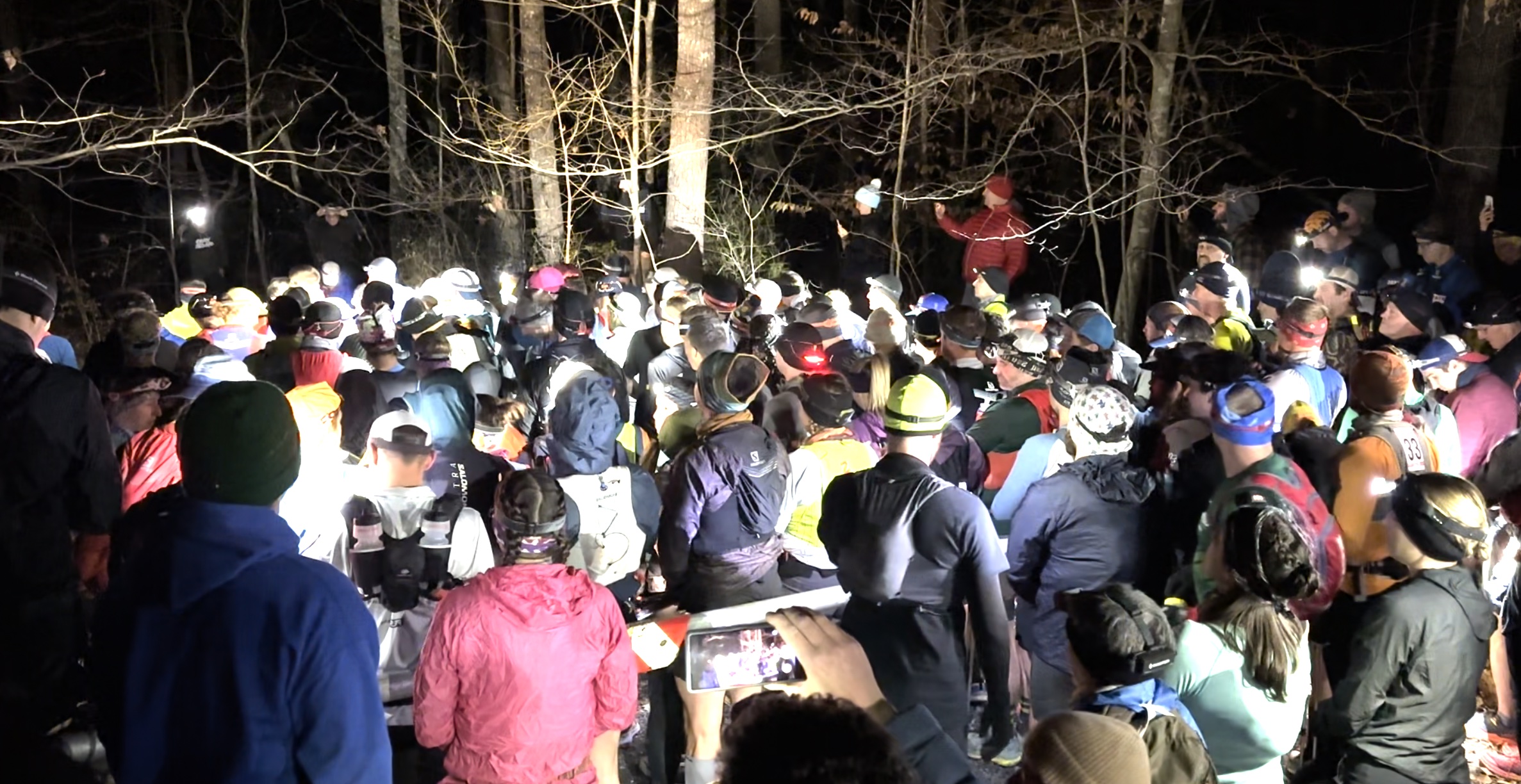
Start line, 2023 Hellgate 100km++ trail race, 12:01am

Lloyd Christmas: What are the chances of a girl like you and a guy like me…ending up together?
Mary Swanson: Not good.
Lloyd Christmas: Not good like one in a hundred?
Mary Swanson: I’d say more like one in a million.
Lloyd Christmas: So you’re telling me there’s a chance!
— Jim Carey in Dumb and Dumber

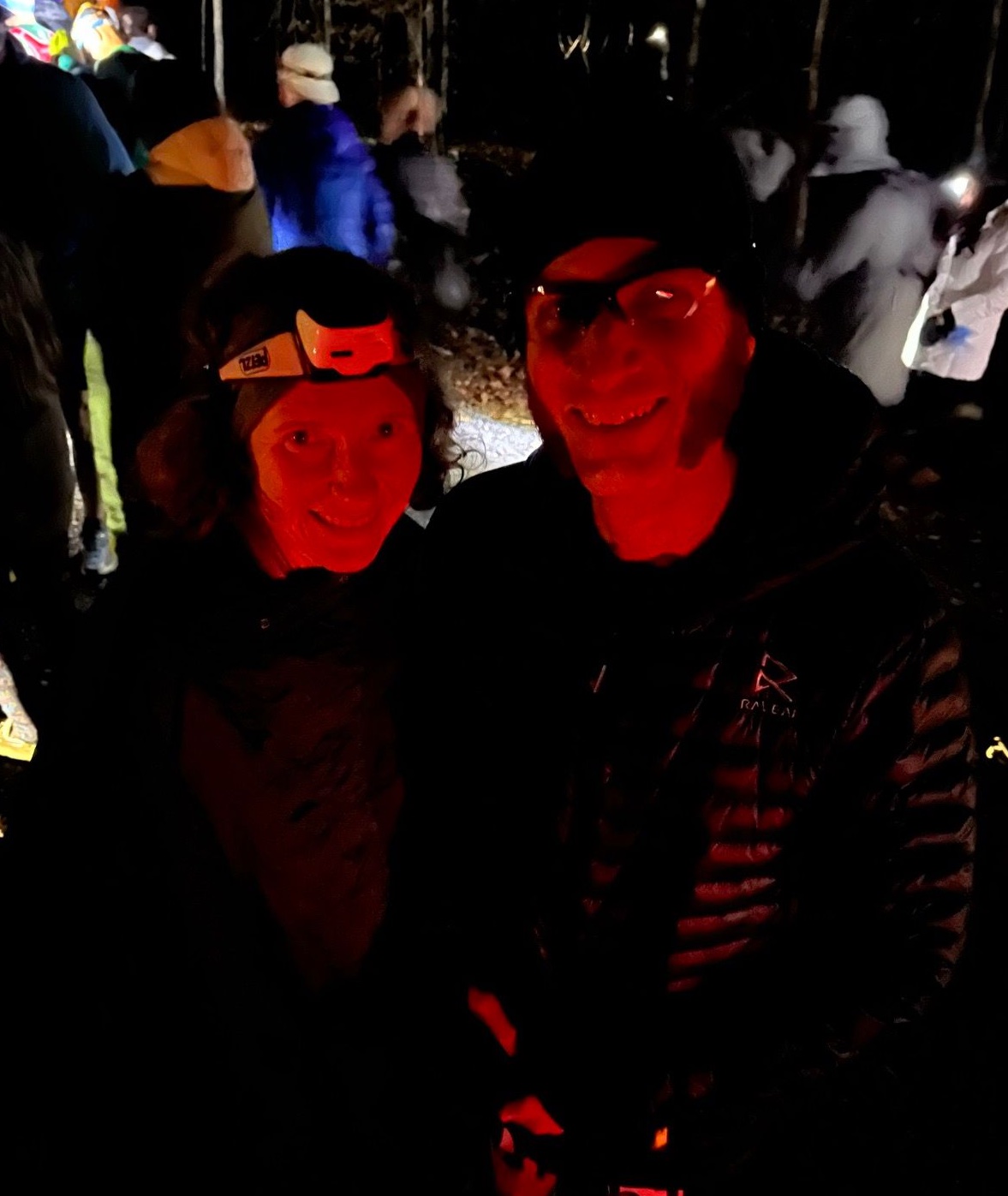
My upside down headlamp represents how prepared I was for Hellgate. Aaron kindly noticed and fixed it.

Dumb and Dumber. On a brisk December night I stand in a field gazing up at a blue-black sky crammed with stars, wondering if I have any chance of finishing the Hellgate 100km+ trail race that will begin at midnight. Hellgate isn’t a race you can wing. Race director David Horton handpicks 150 seasoned ultramarathoners from mailed-in paper applications and weeds out anyone unprepared for a mountain course devilishly designed to test you in unexpected ways. You have to feel pretty confident in your fitness to take on Hellgate’s midnight start, sleep deprivation, long climbs, knee-deep leaves obscuring loose ankle-breaking softball-sized boulders beneath, and unpredictable winter weather that can lather the trails in ice, drench you with freezing rain that no one saw coming, or give you “Hellgate eyes,” a condition where corneas freeze and you temporarily go blind. Hellgate eyes can occur in mild weather, so the problem isn’t just eyes that get cold, but dry. During hours of wide-eyed staring at rocks and leaves trying to stay upright, sometimes you forget to blink. Dozens drop out of Hellgate before the race even starts and I wonder if I should join them.

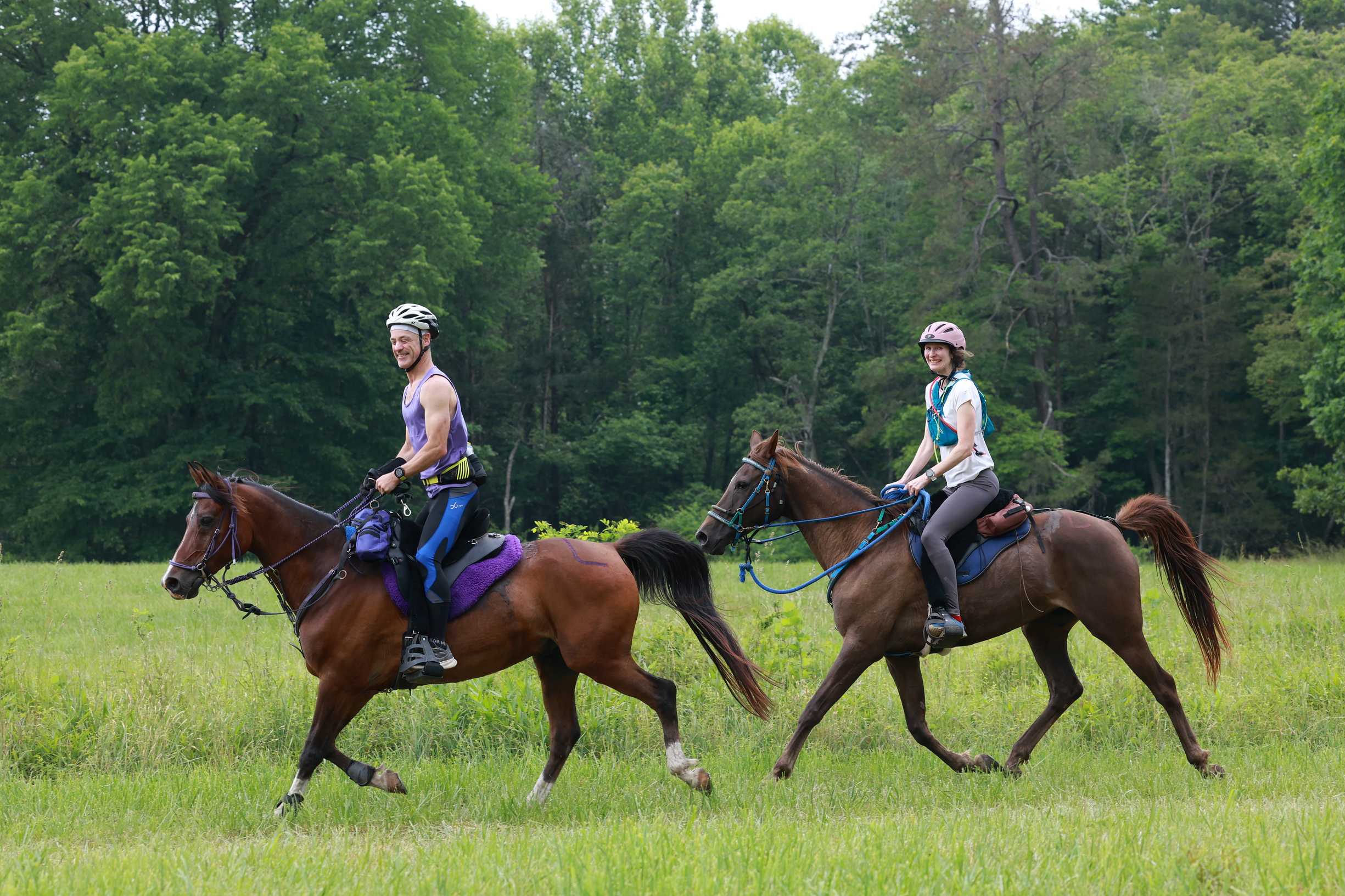
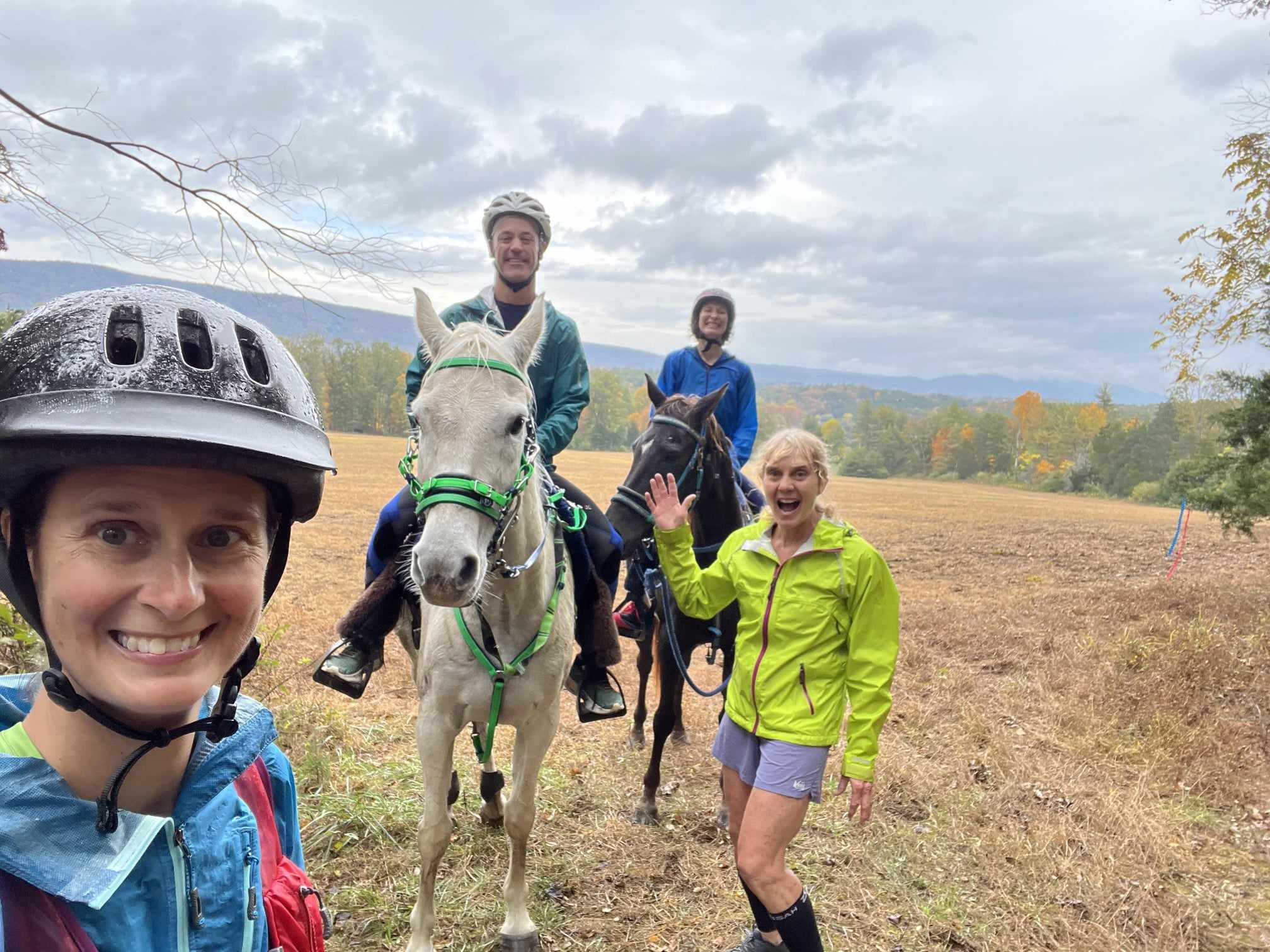
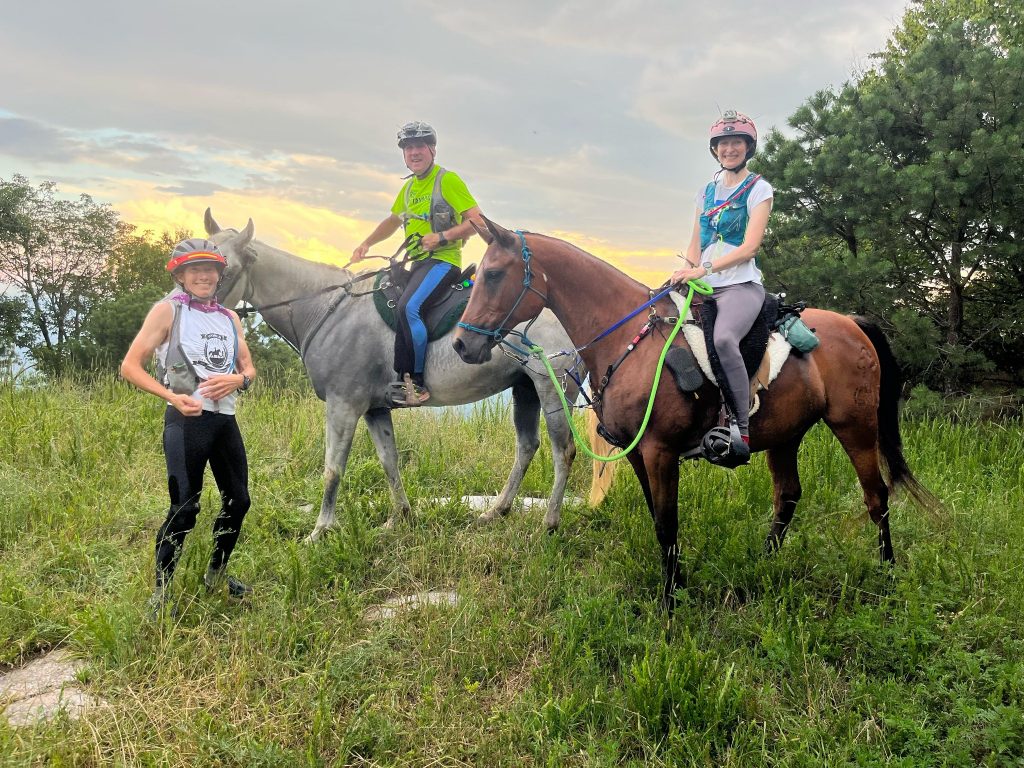
“Ride N Tie” races cover 20-30 miles using a 17th century technique to efficiently transport two people using one horse. (While Chris and I ride, our teammates run, and then we swap after a mile or so.)

The hardest part of jumping off a cliff is the waiting on the edge, wavering. Stupid or brave? Stupid or brave….? Hellgate actually has a “Stupid Award.” Two years ago Will Weidman won it for missing a turn into the woods towards the end of the race and bombing down the road an extra mile or two in the Forever Section. I’m thinking I could win it this year for starting the race and only making it 5 miles (that’s got to be some kind of a record). Number one sign you shouldn’t try to run 66 miles of gnarly trails: you don’t seem to own trail running shoes anymore. One week before the race I did a short test run to gauge if my injured Achilles might last 66 miles. Aaron, do you know where my trail running shoes are? He sighs. When did you last wear them? I pull out my calendar. November 7. More than a month ago. Ride N Tie season had just ended and I was switching gears to focus on Hellgate training. That didn’t last long. 0 days, to be exact.

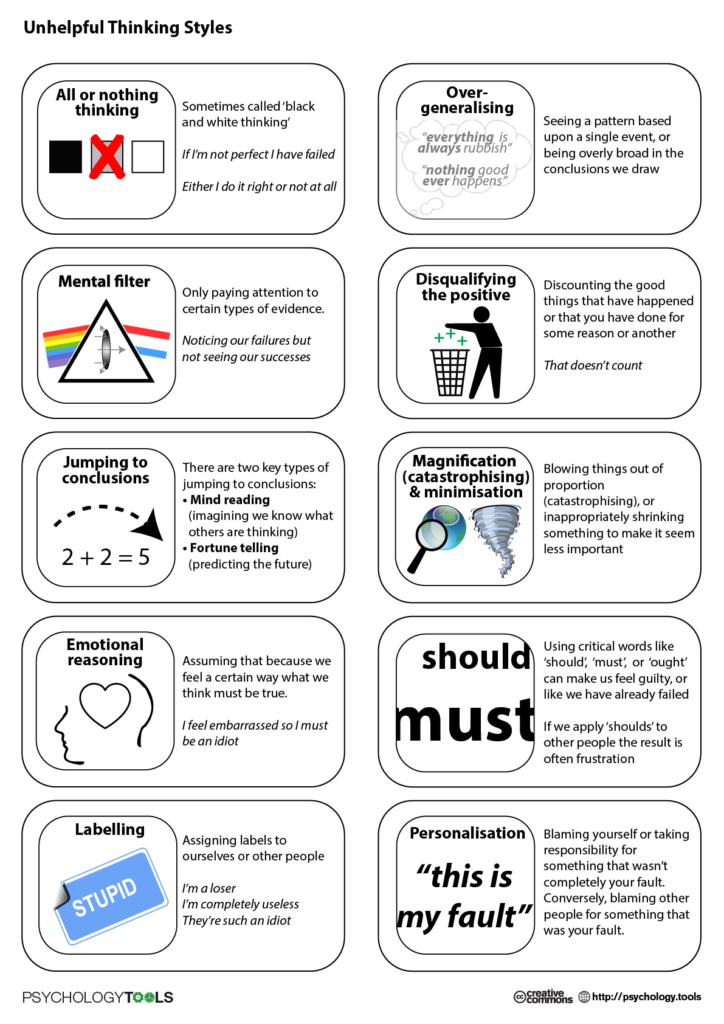
For weeks I planned to write David Horton a courtesy email to let him know I was dropping out of Hellgate and he could give my spot to a more deserving runner. My stats from the last month were pretty dire. But I can never hit send. A deep burn in my chest always stops me. Addiction? Mania? Delusion? Obstinance? I glance at the Unhelpful Thinking Styles reference guide my therapist gave me that’s pinned to the fridge. I ask my husband Aaron which mind trap I’ve slipped into. Black-and-white thinking? Mental filter? Then I ask for his honest opinion. Have I a fighting chance of finishing Hellgate this year?

I wouldn’t put it past you….” He stops and backtracks, recalling how many times a husband’s offhanded remark, delivered without the surgical precision in wording in tone sought by his wife, has crushed her dreams. “No,” I interrupt him. “That’s all I needed to hear.” Aaron is organized and methodical, but marmots are whimsical and believe in race magic. Or just dumb and dumber. This time I don’t need a ringing endorsement. I just need to know I’m not caught in an obsession and sliding down one of my self-destructive wormholes. “There’s a chance!

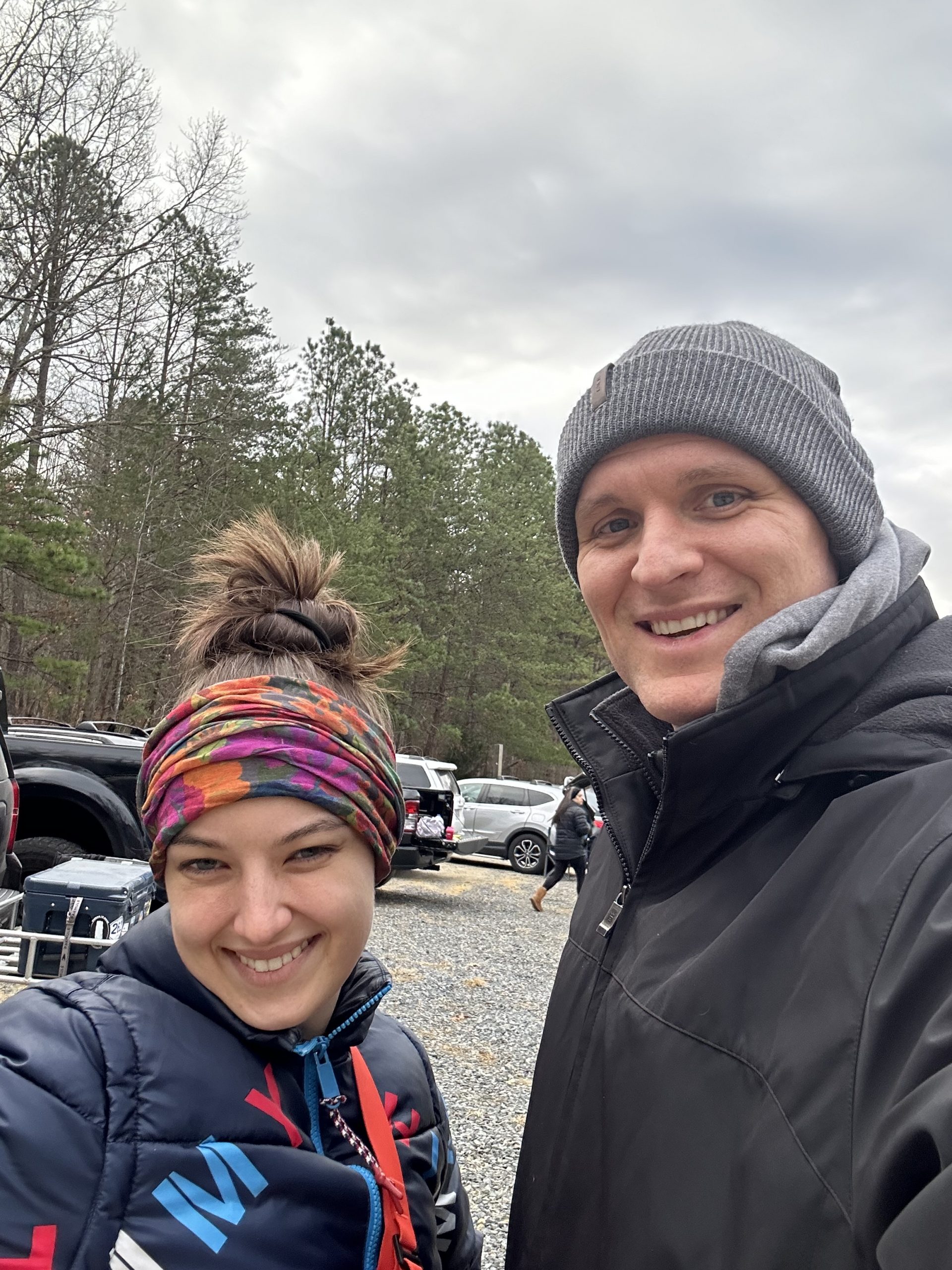
Aaron Schwartzbard Pro Hellgate Tip #1: Don’t Clock Yourself On The Gate In The First 30 Seconds (This Happens). My decision to start Hellgate seems ill-advised, but instantly lifts a weight off my shoulders and I feel ten pounds lighter. Aaron is careful never to pressure me to run Hellgate, fearing my wrath if things go wrong, but I know he’s delighted I’ve decided to come along. I’m his plus-one. Aaron is one of the most recognizable faces at Hellgate. He’s completed all 21 Hellgate races, going back to the inaugural race in 2003, and he won the race in 2007. His lively blog description of the course’s many hazards — geological, psychological, and otherwise — became the definitive guide, now posted on the Hellgate website along with Keith Knipling’s GPS mapping. I never read either course description, Keith or Aaron’s. I’m not a “details” girl. Most of Aaron’s Hellgate advice goes in one ear and out the other while I’m busy watching birds. But I do listen to Aaron’s advice regarding the gate.

You can’t walk three feet at Camp Bethel without being reminded Aaron is a beloved race fixture. When Aaron sneaks into the end of the race briefing, Horton stops mid-sentence and introduces Aaron in front of the crowd (and heckles him for “ugly sideburns”).

Hellgate doesn’t begin on a wide open road, but directly at the trailhead, so it’s pretty narrow and everyone is crammed in tight. Imagine the elbow-to-elbow jostling of a big city marathon with the added challenge of it being the middle of the night and pitch black, except for 130-odd headlamps swiveling in every direction to greet old friends, blinding everyone, and I just try my best to avoid getting clocked by a neighbor’s trekking poles. In the center of the scrum is a large metal gate that blocks cars from entering the trailhead. Half the Hellgate runners stand in front of the gate and the other half are behind it. If this seems like an unnecessary hazard (why can’t we all just move up 100 yards?), well, get used to it; Horton has plenty more tricks up his sleeve.

I start road races up front in the “seeded” wave, but tonight I hang in the tail end of the pack while Aaron goes ahead, slicing through the crowd. Then I recall Aaron’s warning not to run into the gate during the stampede, so I duck under the bars and squeeze myself into a last square meter of space on the forest side of the gate. During the National Anthem my back is pinned against the cold metal bars. Home of the brave finally comes, Race Director David Horton counts down to midnight, and the human wave surges forward, hooting like Apache at the start of an attack. Aaron advised me to link up with a woman named Alyssa, described as friendly, talkative, and overall “very marmot.” (More on what that means later.) But in the chaos of swinging elbows, flying poles, and blinding headlamps, I never locate Alyssa. It doesn’t help that I’ve never met her and have no idea what she looks like.

Matt and Addie, 12 hours later

Addie Never Sees Her Uncle The Same After This. My friend Matt watches the twinkling headlamps disappear down the road and tries to explain to his niece Addie why she had to surrender her Saturday night to drive around the woods on a cold winter night chasing runners. Here’s the deal. Aaron will finish Hellgate somewhere between 13-15 hours. We don’t have to worry about him. Martha is…..our wildcard. She ran Hellgate two years ago in a little under 15 hours. But her Achilles is injured and she barely ran all month and might bail at the first aid station. But as long as she’s in the race, she’s our main job. I’ll pace her for the last 20 miles, if she makes it that far. If she drops I’ll pace Aaron instead. Addie gulped. When Matt recruited her for this roadtrip he failed to mention that he’d join the race as a pacer and abandon her to navigate the van alone through the maze of backwoods roads in southern Virginia’s Blue Ridge Mountains. She is about to voice her concerns when Matt adds one more thing: I should also mention Martha’s a puker.

The face of relief after my first Hellgate finish in 2021.

Sissygate. The brisk night air feels fine against my legs, vindicating my decision to wear shorts instead of long tights. Sissygate, Horton scoffed when the temperature nudged above freezing. Historically, Hellgate runners get frozen club feet after crossing a frigid creek in the opening miles, but this year the creek is low enough to rock-hop and I give a squeal of delight. Two years ago I waded through and my soaked feet blistered so badly I thought I had no skin left (I did, it just didn’t feel that way). That year Hellgate’s notorious “fog year,” I managed to stumble through all 66 devilish miles, overcoming stomach problems, injuries, blisters, and a pervading sense of terror that I’d get lost in the fog. When I scraped together my first 100km completion in the midst of a deep pandemic slump/midlife crisis, it moved a medium-sized boulder in my life.

Aaron, Bjorn, and I crash at Sean’s in Colorado every August for “Hellgate training”

Doctors Know Which Problems Other Doctors Can Fix And When You’re On Your Own. My Achilles tendon grumbles on Hellgate’s big early climbs, but at a level I can handle, and so far the race is going better than expected. I’m lucky the sensitive tendon was spared from the frigid creek, which would have stiffened it up. I’ve managed chronic Achilles pain for the better part of my life, ever since I injured it at age 19 playing collegiate soccer. The medical community offered little help when it came to managing chronic pain with no obvious source on x-rays or MRIs, but I learned I could run long distance on it. So I switched from soccer to cross country my junior year of college, finished All-America, and have been a runner ever since. Figuring out when to rest tendinitis and when to run through it is my least favorite game. Overuse injuries are dark art, not science. Just ask my friend Sean’s father who’s an ultrarunner and orthopedic surgeon at the esteemed Cleveland Clinic. He wrote a recent memoir about running hundred mile races through chronic pain in his 60s and 70s, using handmade braces and devices that sound straight from the 17th century.

West Virginia, August 2023. Trying to be more heron.

Apparently “Spirit Animal” Is No Longer PC. Aaron needs no pacer at Hellgate. If Aaron were an animal, he’d be a heron, silently striding through the water with long, spindly legs and a long, elegant neck, as graceful as a swan, but without the fluffy showiness. Calm, peaceful solo jaunts through the forest recharge Aaron’s (introverted) battery. Herons don’t flock. I’m not a heron, I’m a marmot — squawky, gregarious, social, mountainous, and always whistling to alert others. I need boisterous conversation and laughter to keep my (extroverted) energy up. Before we had our son Bjorn, I never did long solo runs. When we started a family, I knew pregnancy would be a physical setback, but I never considered how lonely I’d become after losing my running buddy for the next decade. Someone always stays home with the child when the other ventures off. Bjorn was one year old when the COVID-19 pandemic hit and my loneliness shot to 10. Aaron solves problems with technology, so he bought me bone conduction headphones and made a music mix to keep me company. The headphones met with mixed success; Mumford and Sons made me drowsy, but it was better than hearing my own thoughts.

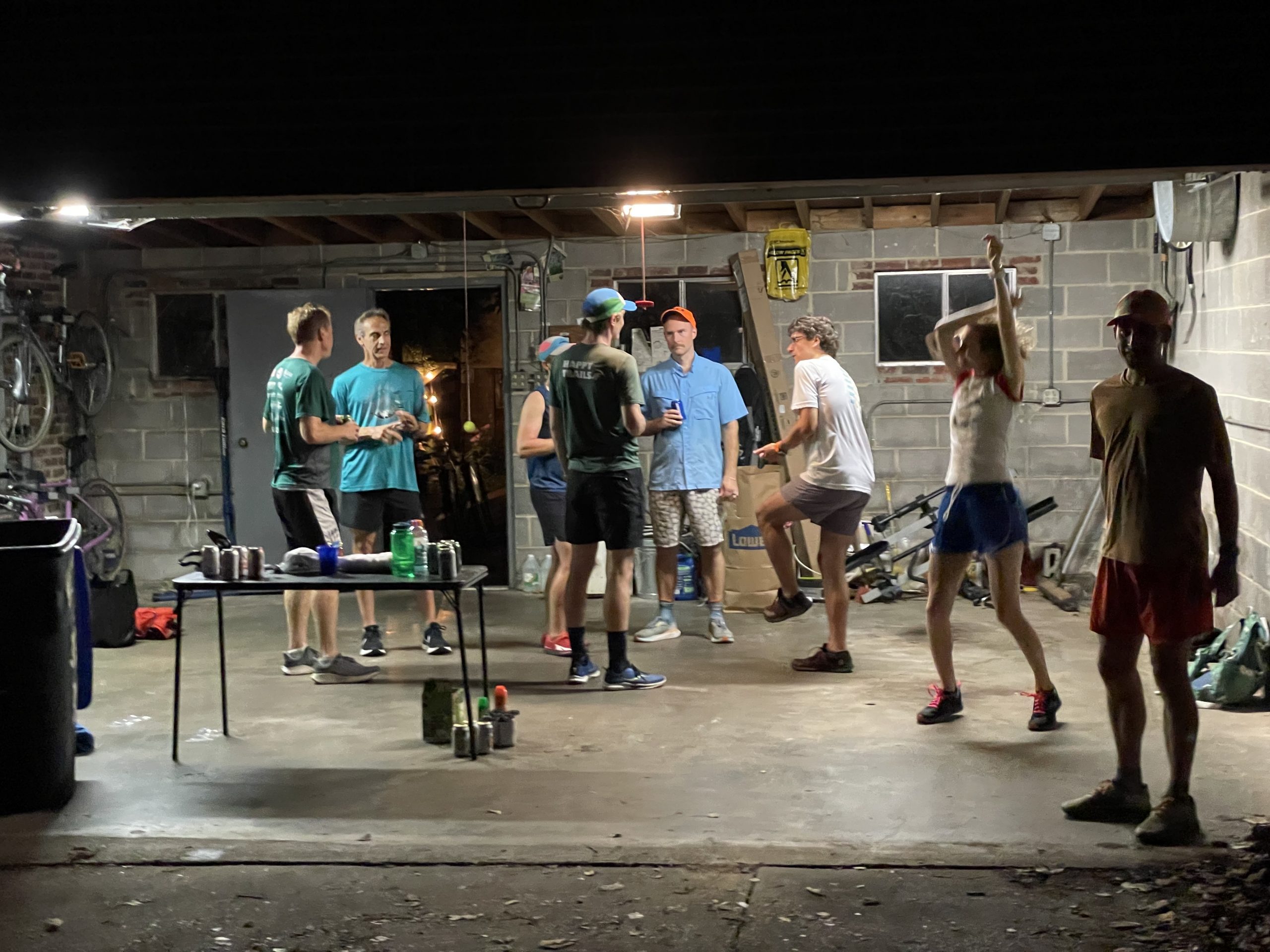
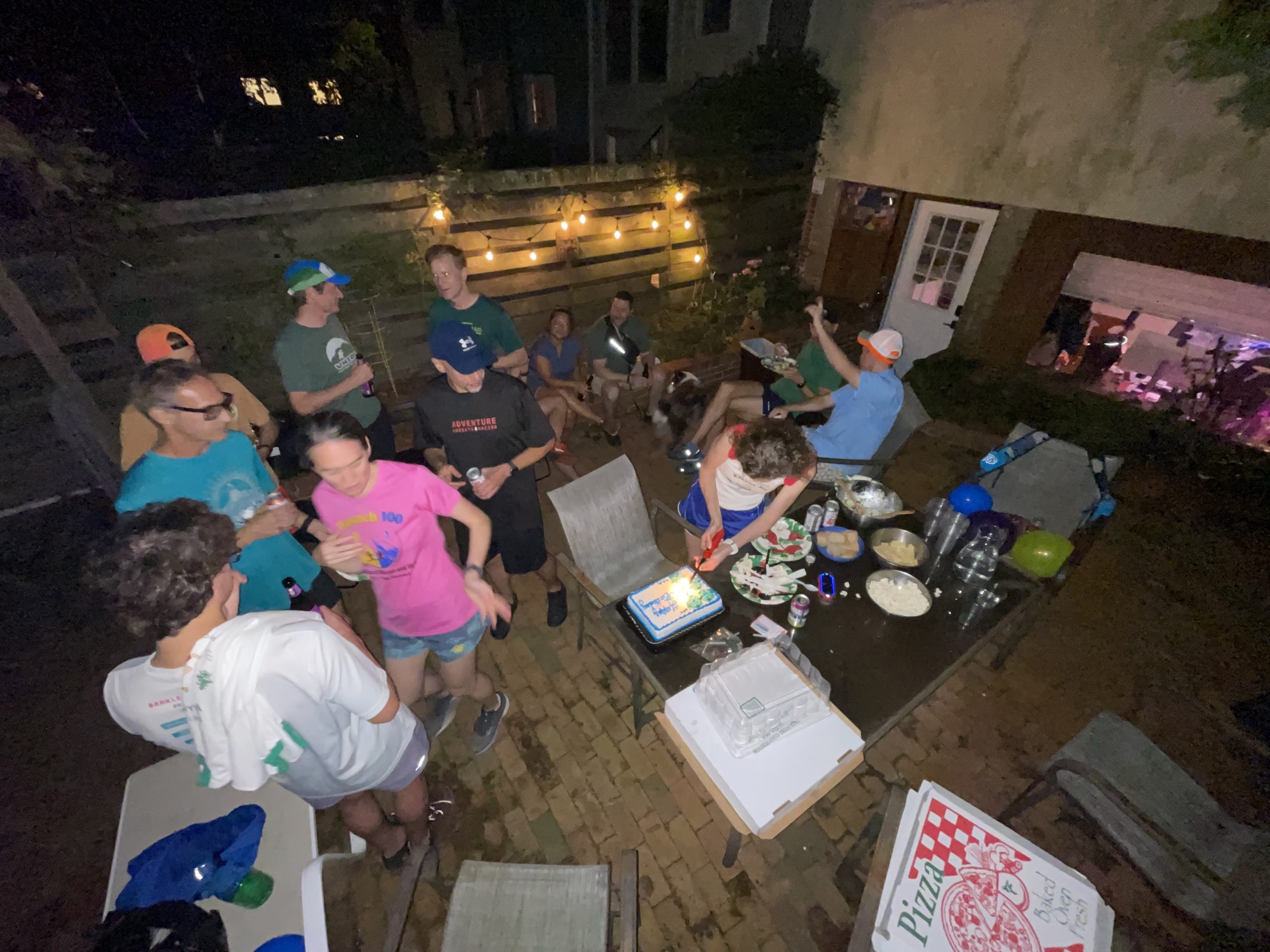
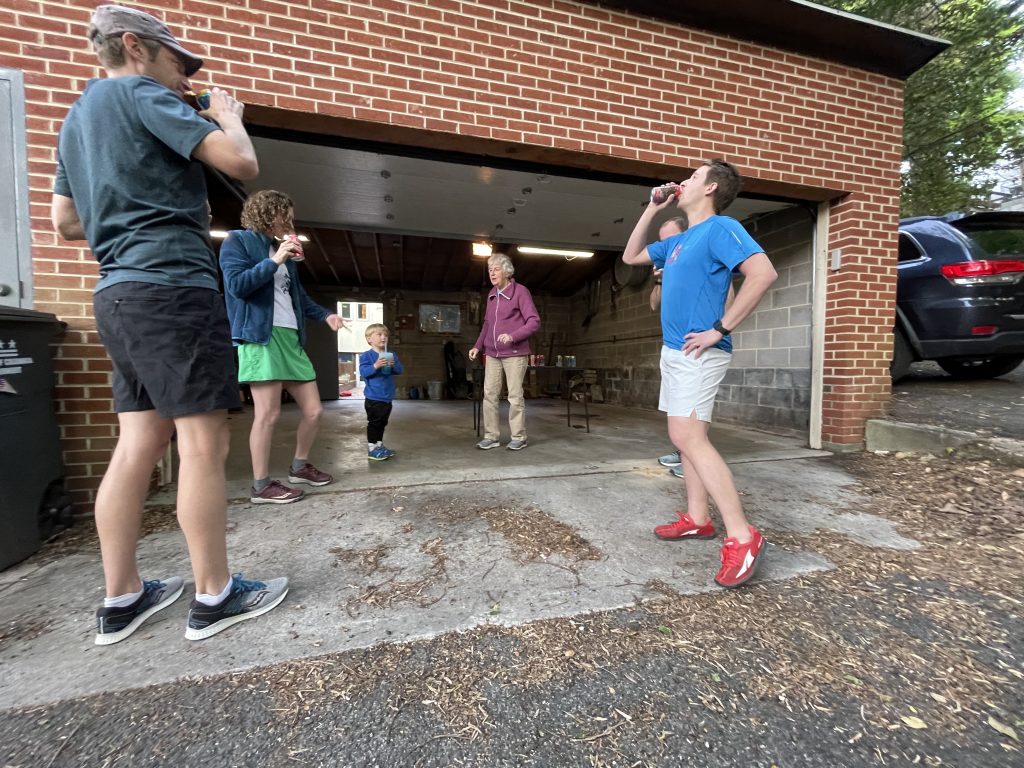
Getting to be very marmot as DC’s Woodley Ultra Society sobers up in our backyard after running the October 2023 beer mile (Trevor is champion!).

Aaron’s Main Stress At Hellgate Is His Unpredictable Wife. At each Hellgate aid station Aaron collects intel from Matt on how I’m faring. She made it past the first aid station. Aaron sighs with relief. If I can make it 7 miles, odds are I can make it 66. At the halfway point, Matt’s reports get longer. She’s puking and having trouble eating, but she’s surprisingly cheerful. She kept talking about how beautiful everything was. Nothing like last time. No sitting on overturned buckets in despair.

Signs I Watch Too Much NCIS. The first time I ran Hellgate I got really spooked when I started vomiting halfway through. I was alone, disoriented, freezing, and struggling to follow the twisty course in the dark fog. My deepest fear was I’d wander off course into the wilderness in the wee hours of the night, slip on wet rocks and leaves, hit my head, and freeze to death in a ditch. No one would find my body until it was too late. Or worse, I’d wander off trail into a group of strangers not associated with the race and you can fill in the blanks. The sound of hounds howling in the distance reminded me I was not alone out there. My imagination swelled with threats — cliffs, axe murderers — lurking behind the fog.

I Legitimately Missed Aaron’s Acoustic Guitar Mix. The second time around I knew the Hellgate course (for the most part) and had a degree of confidence that I wouldn’t get axe murdered. Still, I hit a low again at sunrise. I puked hard, as poor Sophie had to witness, losing all the food I’d worked so hard to get down that night. After a night with no sleep, I was exhausted, sick to my stomach, totally depleted, and alone. My bone conduction headphones battery only lasted 6 hours, so even Mumford and Sons had split.

Shortest Blind Date Ever. On the descent down to Jenning’s Creek the sun began to poke out. I came across Alyssa, the very woman Aaron suggested I run with. Our banter lifted my mood and I forgot about my throbbing Achilles and the acid taste on my tongue. But after the Jenning’s Creek aid station comes a long road climb. I stop running and hike up the road, Alyssa keeps trotting, and my new friend disappears around the bend. Hellgate can be a lonely place for people like me who aren’t strength runners.

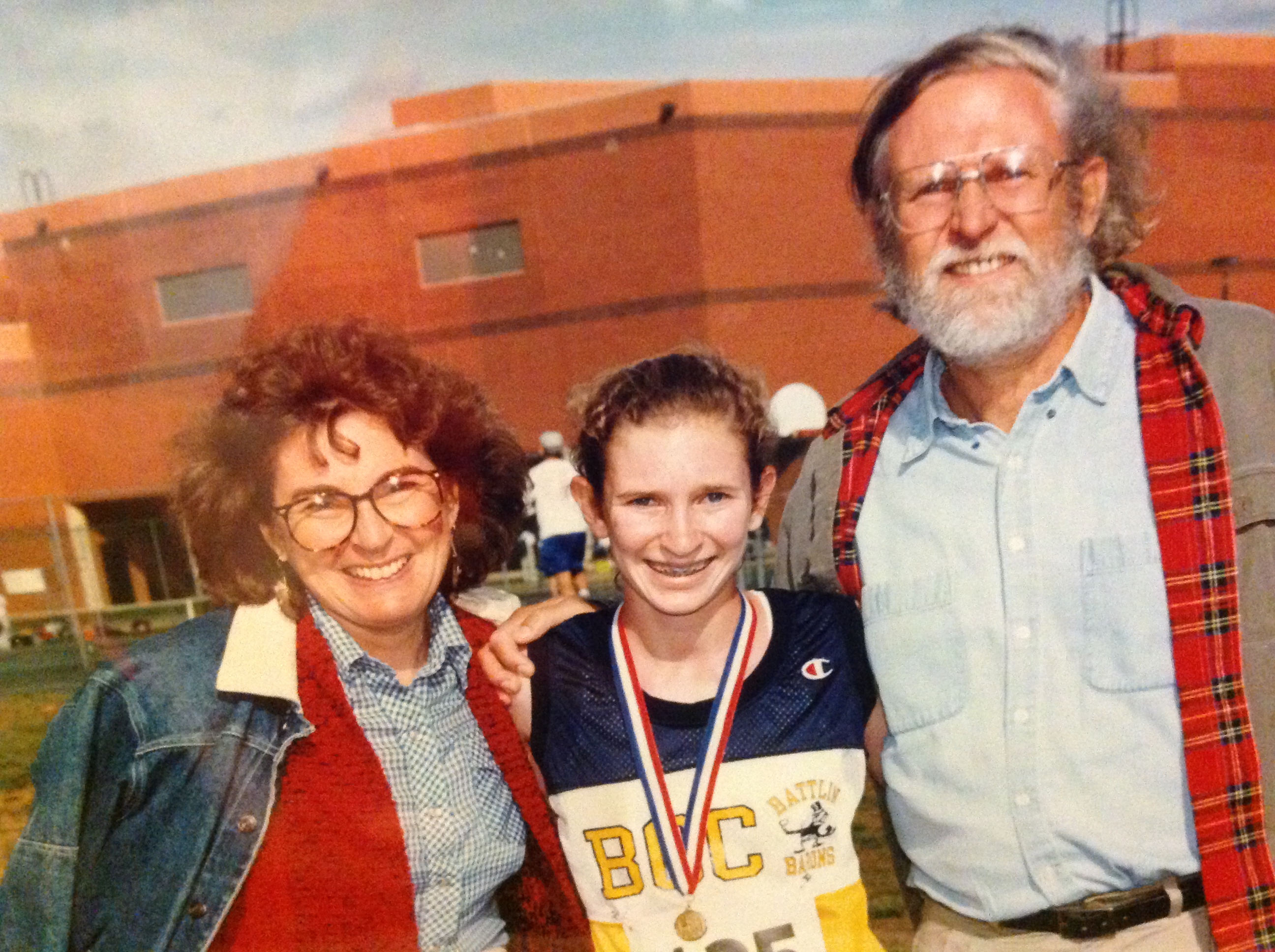
After winning the Montgomery County girls high school xc championship as a sophomore, 1996. When I got into marathons as an adult, I added a new problem: stomach issues. A good day of racing meant nausea and light gagging; a bad day left a trail of vomit and sometimes a hospital bill.

The Real Reason I Got A PhD in the Molecular Evolution of Infectious Diseases. It may surprise people that I’m not a very confident runner. Someone who wins races consistently and sets course records doesn’t seem like someone who should go into every race wondering if she can even finish. But I’ve been that way since I was 14. I’m either injured, sick, haven’t trained enough, or all of the above. How can you be so delicate? my father would ask me as a teenager. It frustrated him to have a daughter with running potential, but buried beneath a fragile frame. One week I was state champion, the next four weeks I was too sick to get out of bed. My first season of collegiate cross country I was All-America, the next fall semester I spent home from college with Campylobacter, mononucleosis, and hepatitis. I was pale, underweight, and always visiting the doctor for something — chronic respiratory illnesses, asthma, delayed female development, surgery. I popped so many pills as a teen I needed a list to keep track of which times to take them, with food or not. I needed more pills to deal with the side effects of first ones. My father was the opposite: ruddy, stout, and impervious. He drank like a fish but did not even know what a headache felt like. He was a bull and I was a feather.

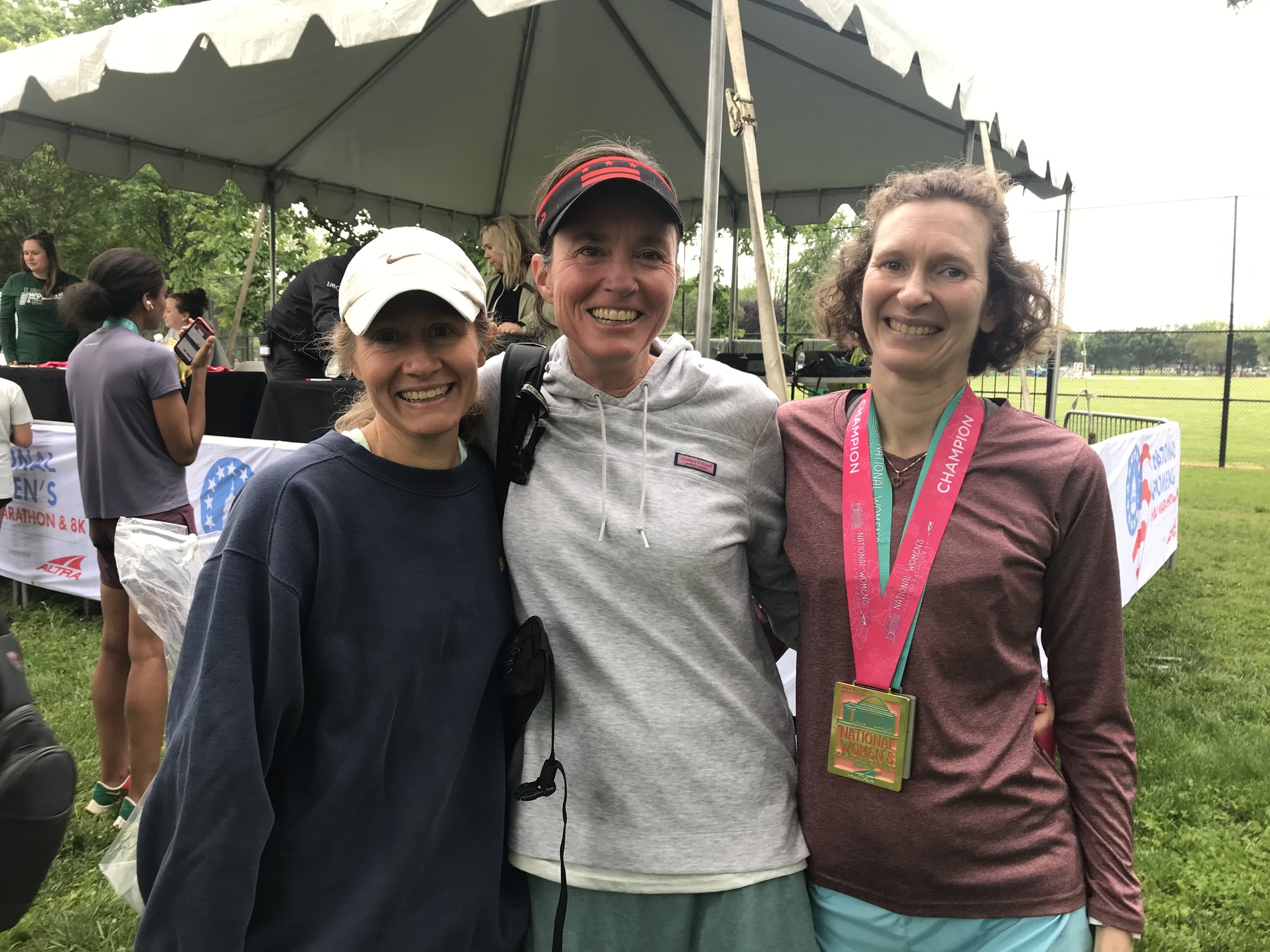
Pictured here with my old Bethesda Chevy-Chase High School track teammate (Prentiss) and coach (Selena) after I won DC’s Womens Half Marathon in May 2023. They’re amazed I’m still running after being such a hot mess as a teen.

As I walk through the valley of the shadow of death
I take a look at my life and realize there’s nothin’ left
‘Cause I’ve been blastin’ and laughin’ so long that
Even my momma thinks that my mind is gone

Without Mumford and Sons, I Drift Into Coolio. My lack of eating catches up to me on the Devil’s Trail, named for its endless miles of ankle-breaking boulders buried under leaves. Chewing on a morsel of bacon fat for an hour tricks my mouth into thinking it’s doing its job, but the belly and legs are not fooled. I pick green M&Ms out of my trail mix, but don’t consume nearly enough calories and slip into a low glycemic trance, waiting for an aid station that never comes. I spend an hour deep in the hole, kicking rocks and humming Coolio. (He died this year.) My mind is unraveling and I’m losing control, just like in October 2023.

I began 2023 on solid footing, resolved to return to Hellgate after missing out in 2022. DC’s Woodley’s Ultra Society was back in action after a long pandemic slump and I also found a new sport called “Ride N Tie” that combines my two favorite things, trail running and horseback riding. Jury’s out on how much Ride N Tie miles contribute to Hellgate training, but I love horses more than anything (Aaron pretends he didn’t agree that someday we’ll live on a horse farm) and just being around them energizes me. I can’t drink coffee, but if I could, 1 Arabian horse = 20 cups Arabica coffee. Plus, there are no aid stations at Ride N Tie so I’m forced to be self-sufficient over 4-5 hour races, taking care of myself and a horse without Boy Scout Aaron around to lend me an extra jacket, headlamp, or snack. Aaron almost fainted on Hellgate morning when I proudly lifted two canvas bags filled with gear and snacks. Marmots, prepare? Has up become down?

Magic still exists in the world.
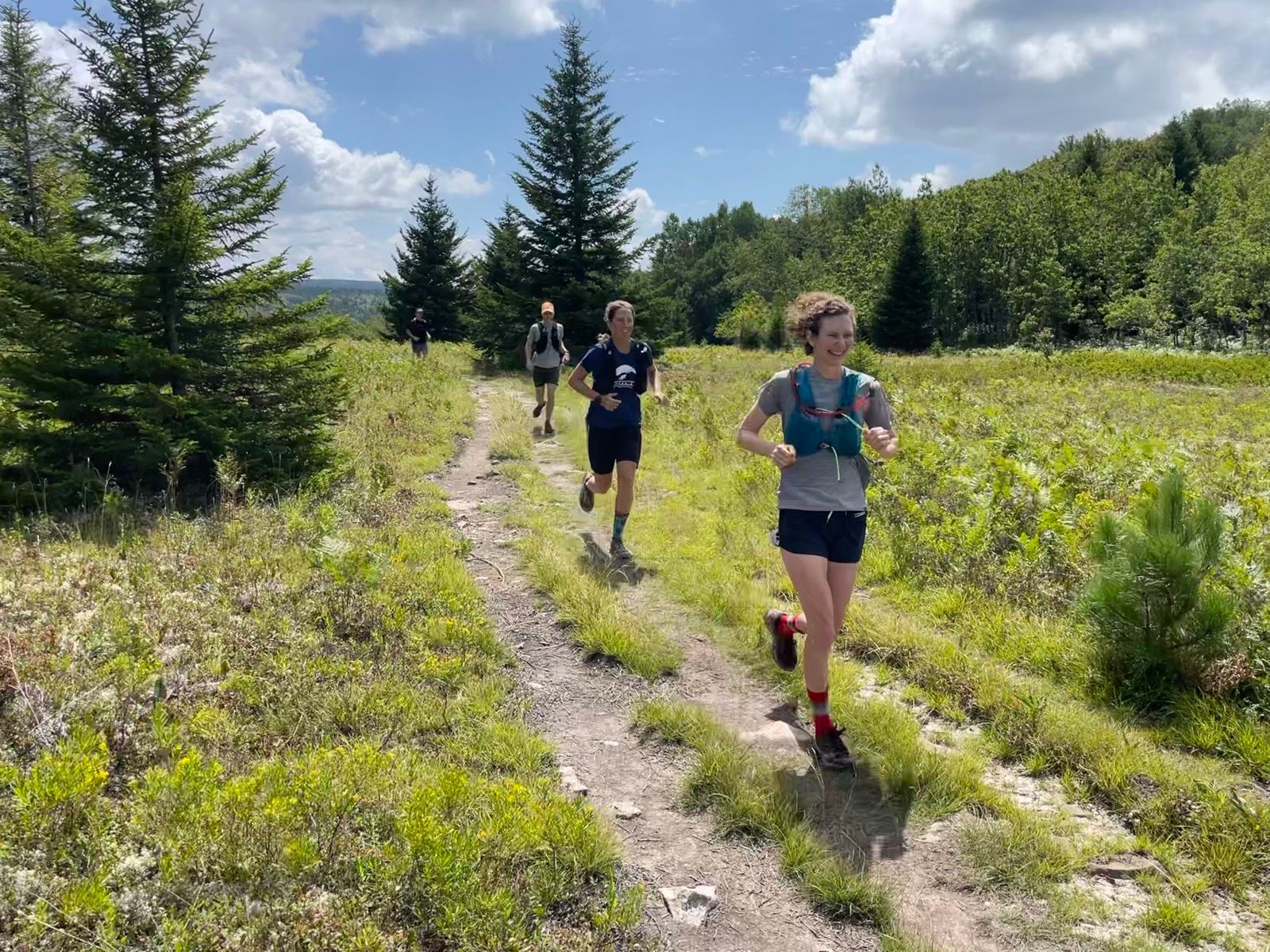
Hellgate Training Is More Fun Than Cherry Blossom 10M Training, I’ll Give Aaron That. New recruits reenergize DC’s Woodley Ultra Society (pictured on a training run in West Virginia’s Dolly Sods) after a long COVID-19 hiatus nearly spelled its demise.

But the pandemic still wasn’t really over in October 2023.

(Don’t Read This Part.) This is the part of the story I don’t really want to tell. The last thing I want to do is add to skepticism and fear surrounding COVID-19 vaccines, which is mostly fueled by misinformation and costing many lives, but I trust no readers change their vaccine plans based on my personal experience. Not all people have the same body chemistry and some people respond differently to the COVID-19 vaccine. I happen to be one of those outliers. Not the weirdest thing about me.

US Government Pours Billions Into Operation Warp Speed to Make a COVID-19 Vaccine and [Embarrassingly Small Number] Into Collecting Data On What Happens After It Goes Into People’s Arms. Five times in a row I’ve had the same response to the COVID-19 injection: two weeks of drenching night sweats, an erratic heart beat, strange pulses in my chest, inflammatory responses cropping up in extremities, and my previously clocklike period cycle suddenly goes haywire. I can still run, but it’s not pretty, and it’s no coincidence that two years in a row my body (and Hellgate plans) fell apart in October after getting my COVID-19 booster. Feeling like I was running through sand aggravated an old Achilles injury. Limping then aggravated my hip. By mid-November my hip was in too much pain to walk. I actually considered getting a wheelchair to traverse DC’s National airport when I had to fly to Rhode Island for a work trip. Desperate, I tried dry needling, which possibly helped my hip but torched my calf and added another limp. One week before Hellgate I was limping from three different pains and owed David Horton an email to let him know I was dropping. The prudent choice was to join Heather, Anthony, Mike and other WUSsies at the Virginia Happy Trails Running Club’s (VHRTC) 50k Christmas run/party. I could try to run Hellgate next year, maybe delaying my COVID-19 booster until January. But my heart sinks every time I try to pull the plug. I stop sleeping. Getting different advice from orthopedists, PTs, and alternative medicine practitioners makes me even more disoriented. I felt paralyzed, so I did nothing.

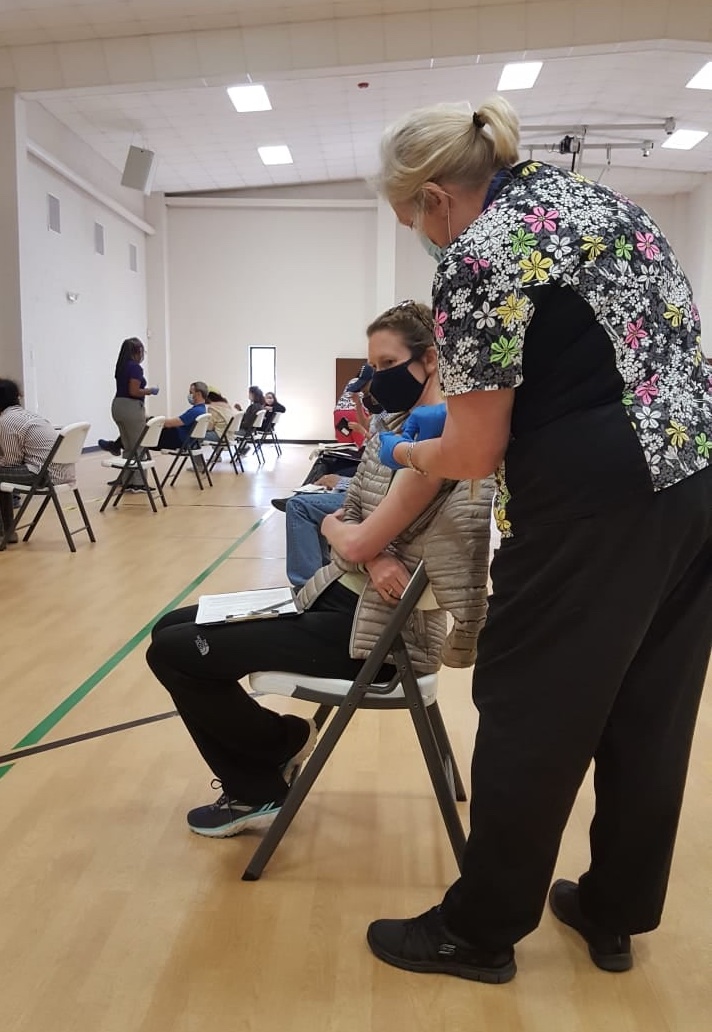
We drove 4 hours to rural North Carolina to get our first COVID-19 mRNA vaccines in April 2021.

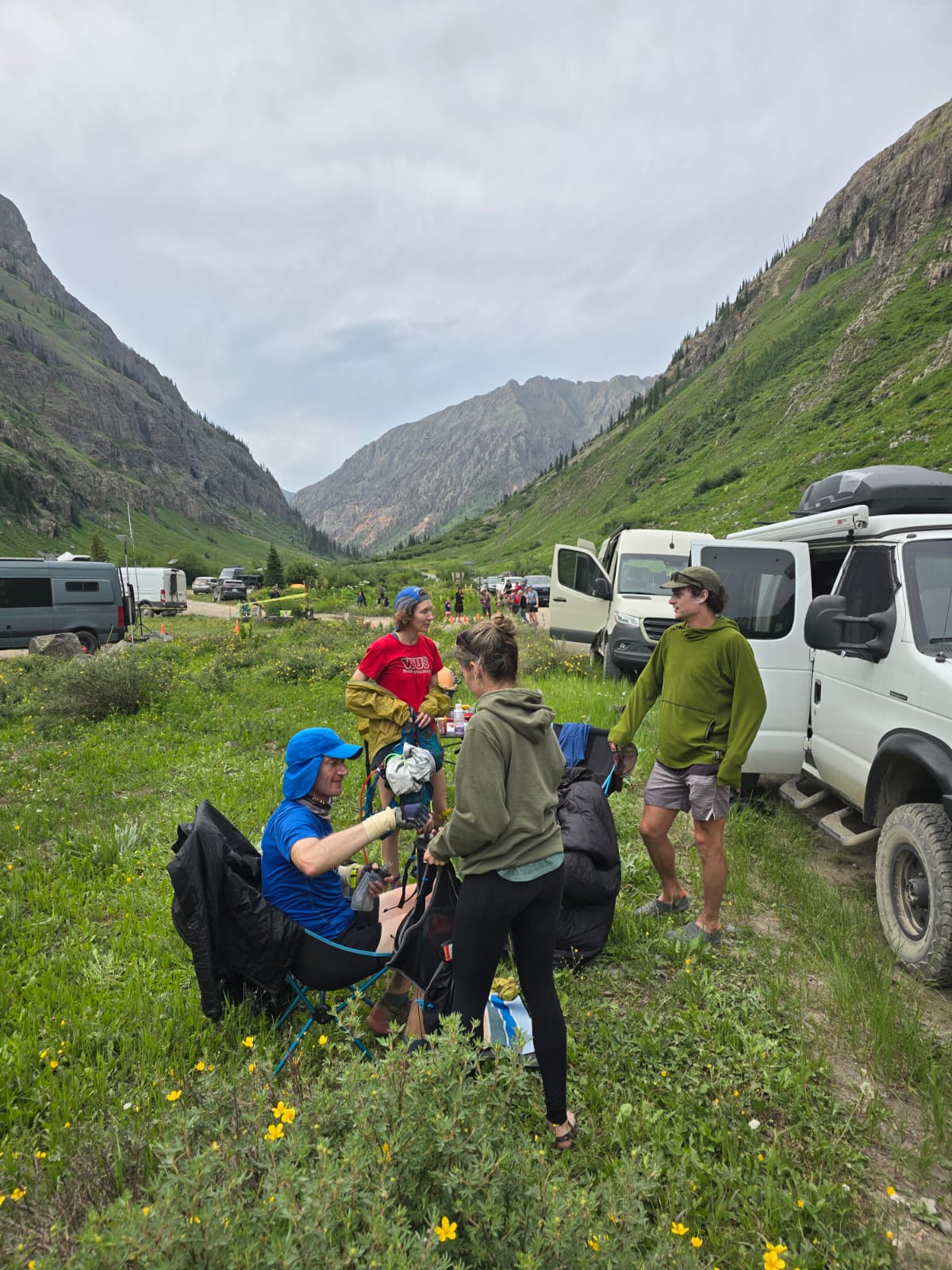
I’m reaching my breaking point on the Devil’s Trail when I finally spill out into a parking lot. The aid station crowd cheers my arrival, but I walk through with the dead stare of a shark, not even making a show of looking chipper. I plunk in a chair (I don’t care whose) and tell Matt and Addie I need a reset. My head spins, my gut churns, and if I don’t find something my body won’t reject, real trouble will come. Two-thirds through the race, the make-or-break moment has arrived. A woman takes one look at my ashen face and flings a fluffy white blanket over me to keep me warm. I feel like I’m buried under the warm wings of a swan.

Seinfeld Season 5 Episode 22, ‘The Opposite’. When I started having stomach issues in ultramarathons, I got what sounded like reasonable advice from a nutritionist who was also a distance runner: stick to simple carbs during races and avoid fats that are hard to digest. But when I cut out things like potato chips and PB&J and stuck to gels and gummies I felt worse, not better. I began to wonder if I my tactics were all wrong. I thought of the time my favorite Seinfeld character George Costanza concluded that every decision he ever made was wrong, his life was the exact opposite of what it should be, and the only way to get back on track was to do the exact opposite of his every instinct. Miraculously, it worked. “My name is George, I’m unemployed and I live with my parents” scored George a hot date. So when I was redlining and out of ideas at Hellgate #1, I took a page from Constanza and ditched the gummies and all my nutritionist’s advice and tried bacon. The bacon strip was the first thing that didn’t come back up, so I called it a win. Credit, George Constanza.

Hellgate has world class aid stations with different themes. The 6am breakfast aid station serves scrambled eggs and bacon, the midday aid station serves cheeseburgers, and the afternoon aid station makes pierogis. Matt calls out the foods offered at each station, which would be helpful for someone who doesn’t spend Hellgate on the edge of vomiting. Sometimes just thinking of food sends me over the edge. Scrambled eggs? did me in last time. Cheeseburgers top of the nutritionist’s no-fly list, but desperate times call for George Constanza. I shoot my thumb towards the sky. Cheeseburger me!

I sit under my swan feathers and nosh my burger like a champ. (Okay, I was nibbling at the pace of a baby mouse, but that was such an improvement over eating 1 green M&M per hour.) I chase with swigs of pomegranate San Pellegrino I packed myself in the canvas bag. I knew I liked you when I saw you packed your own San Pellegrinos, Addie mused. Stay classy, San Diego. There was just one problem. Matt is way too nice to give me the old heave-ho when I get too comfy at an aid station. Matt gently nudges me along by mentioning I’m the 13th woman and another pack are just 15 minutes ahead. A Patagonia puff jacket for a top-10 finish is in striking distance. I wave him off. I’m not racing, I’m surviving. I nestle deeper under the fluffy swan blanket, justifying my delay by continuing to nibble. I know the chair is quicksand. The longer I dawdle, the harder it will be to extract myself. Unfortunately the blanket doesn’t cover my lower legs, which are stiffening at an exponential rate. I can see my calf muscles twitching. They vote for sitting in the chair indefinitely. More than 40 miles in, I’ve already raced farther today than any time in the past two years.

Sean is a “tough love” pacer. He’d make me shove down that cheeseburger and be back on the trail in 5 minutes. But pushy pacers sometimes backfire. Towards the end of the Frisco Run the Rockies Half Marathon I refused to go another step until he relaxed and stopped demanding I pass more women.

When You’re So Tired It Takes More Bandwidth To Have A Disagreement With Another Human Than Get Back On Your Feet. Excuse me, this is my wife’s chair. An anxious man hovers over my swan blanket. She’ll arrive any minute. Matt scowls. Private property? No trespassing? Hellgaters share resources like it’s a kibbutz. Matt prepares to defend my blessed window of eating, when l take matters into my own hands and fling the fluffy swan blanket aside and charge towards the trailhead, cheeseburger in hand. Matt scrambles to gather his pack for pacing duties, trying to catch up to me. (It’s not hard, I’m just ambling.) My belly groans with the infusion of meat and bubbly sugary drink. A burp makes me feel human again.

It’s Pretty Much A Hard Rule That I’m Not Running Hellgate Unless Matt Is There To Crew And Pace. Once Matt starts pacing, a calm washes over me. Matt is unflappable when I need a steady hand, enthusiastic and talkative when I need some pep, and kind and gentle when I’m making unreasonable requests. Fetch a bottle of yogurt hidden somewhere in the van and then catch up to me while I go climb this mountain. Turn off that Garmin beeping every mile or I’m going to throw if off a cliff. He knows I’m too tired to filter my thoughts. Fortunately, Matt can handle anything. Even my cheeseburger toots.

Last year Aaron and I got to celebrate Matt’s first triathlon, followed a couple month’s later by his first marathon. At this rate, Matt’s on pace for Hellgate…maybe 2026?

Barn Smeller (I’m A Horse). Aaron doesn’t believe me, but the reviled Forever Section towards the end is my favorite stretch of Hellgate. With only a half marathon left, the race is in the bag and I can finally stop force feeding myself. No more hedging against future problems like empty stomachs and trashed quads. Whatever’s left in the tank will get me home to Camp Bethel. I’m not sure people realize what a miserable chore it is for me to eat during ultramarathons. I’d rather climb 5 more mountains than have to eat 5 more mini pretzels. When I release myself from the duty of eating it’s like a jailbreak. I run with abandon, leaping over creeks and using downward momentum to scamper up the other side, just like on the Do Loop at home. I realize the guy with the chair did me a favor, prodding me to get back to business just when I needed it. I blast through the last two aid stations; I won’t stop until the finish line.

Aaron Promised I’d Reach A Point In Hellgate When I’d Be Too Tired To Think And My Mind Would Go Zen And Blank. He Lied. The panoramic views in this final trail section make me tear up. Marmots have wild emotional ranges, and the poignancy of my giant adventure coming to an end, after so many months of ups and downs, hits me like a brick. My mind drifts through a kaleidoscope of memories from the past year, highs and lows, from sitting in despair on the orthopedist’s crinkle paper two weeks before Hellgate, to summiting Colorado peaks that summer with Sean, to bombing down Massanutten rock gardens with Nora, to cantering Arabian horses up grassy fields in Fort Valley. I let myself stride out down the road, slicing through the long afternoon shadows cast across the road by trees in the low winter sun. Somehow I’m actually going to finish this thing.

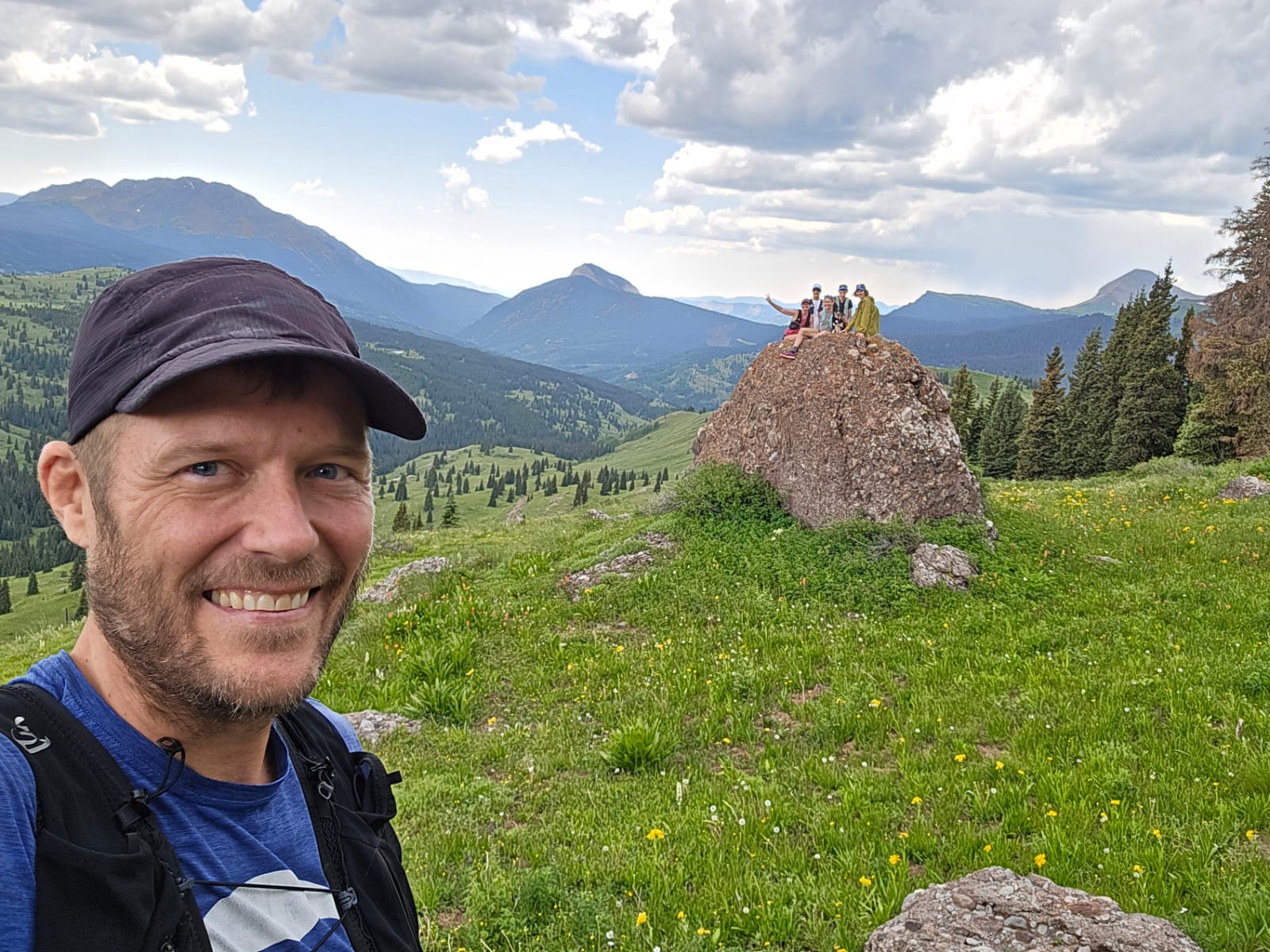
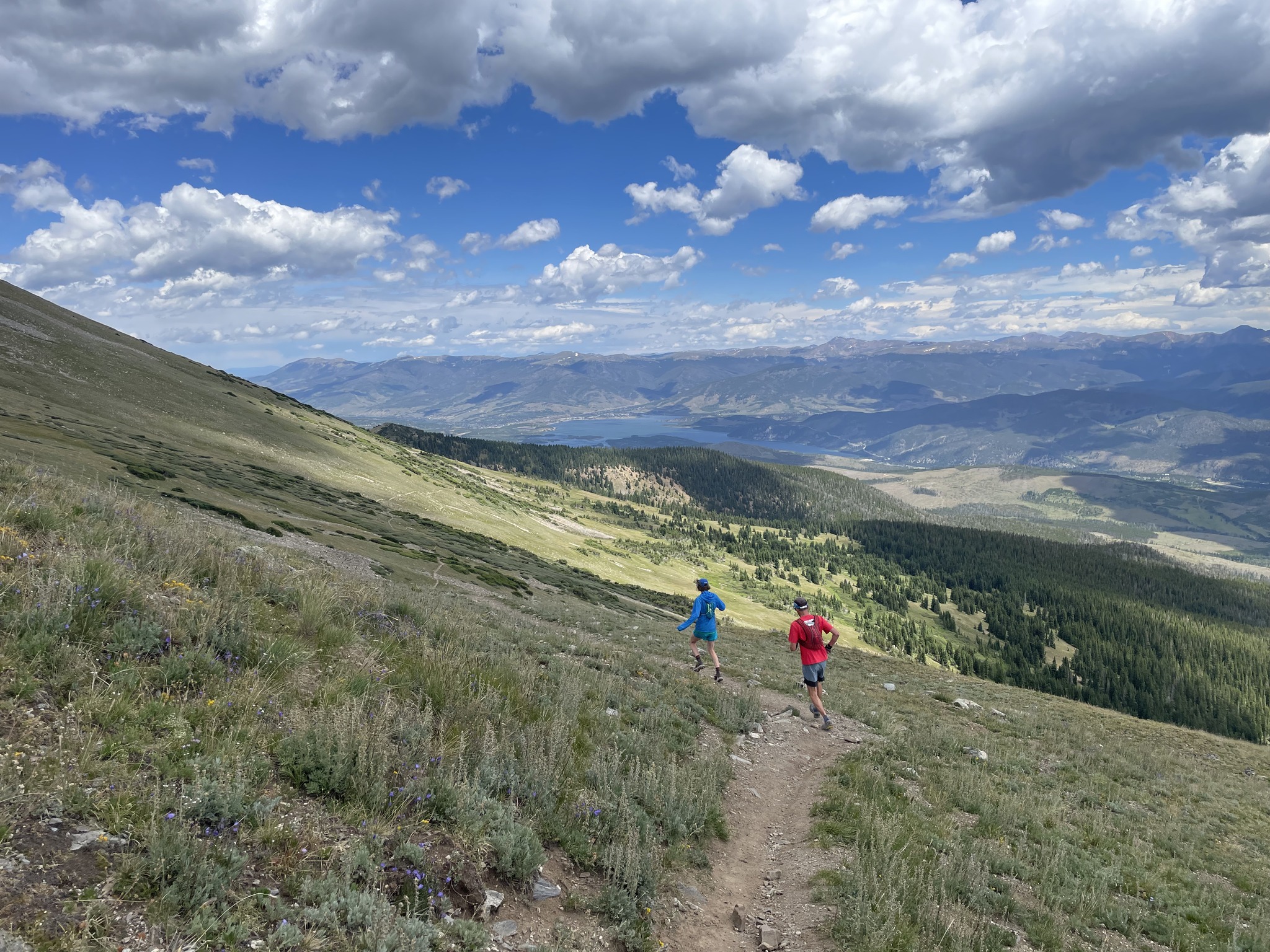
Sean and I take the “long way” from Breckenridge to Frisco. Aaron, Bjorn, and I lived with Sean for 18 days in August. Later Bjorn drew a family tree for a kindergarten class assignment. I explained Sean wasn’t technically part of our family, but Bjorn insisted on drawing a branch for him.

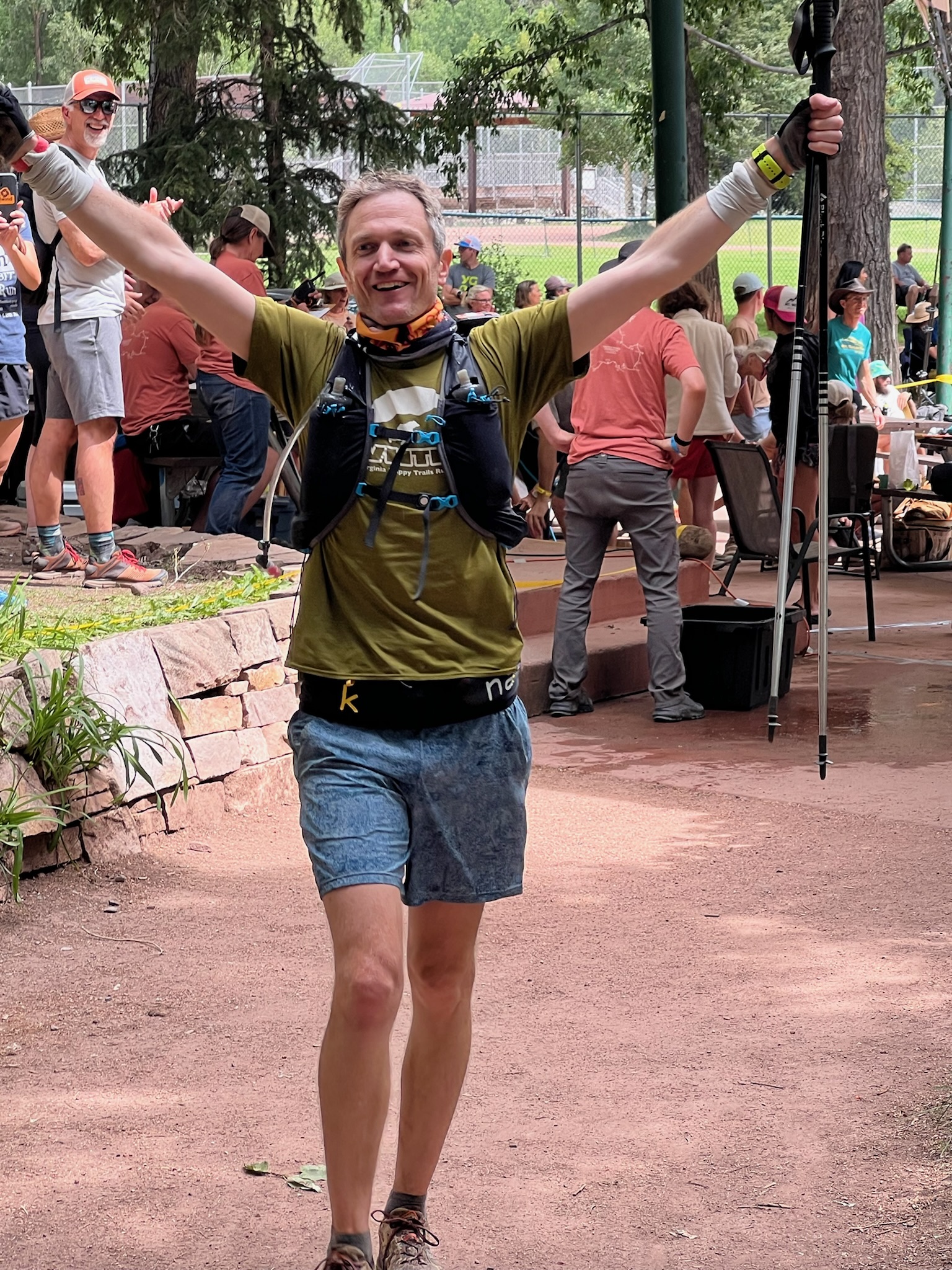
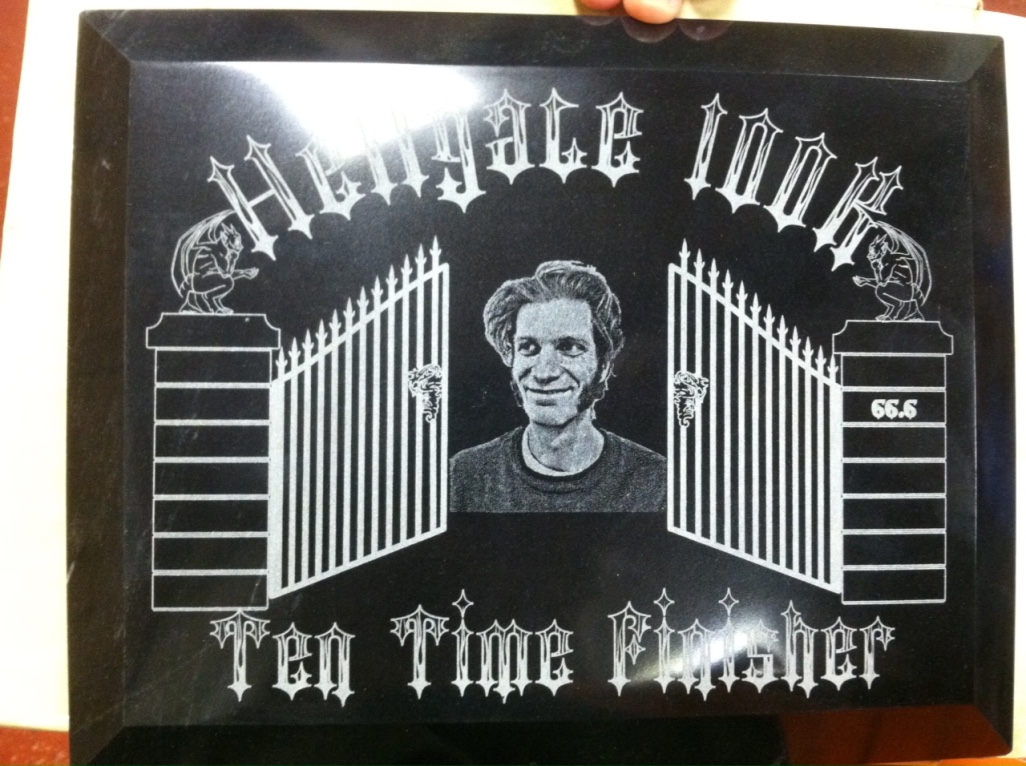
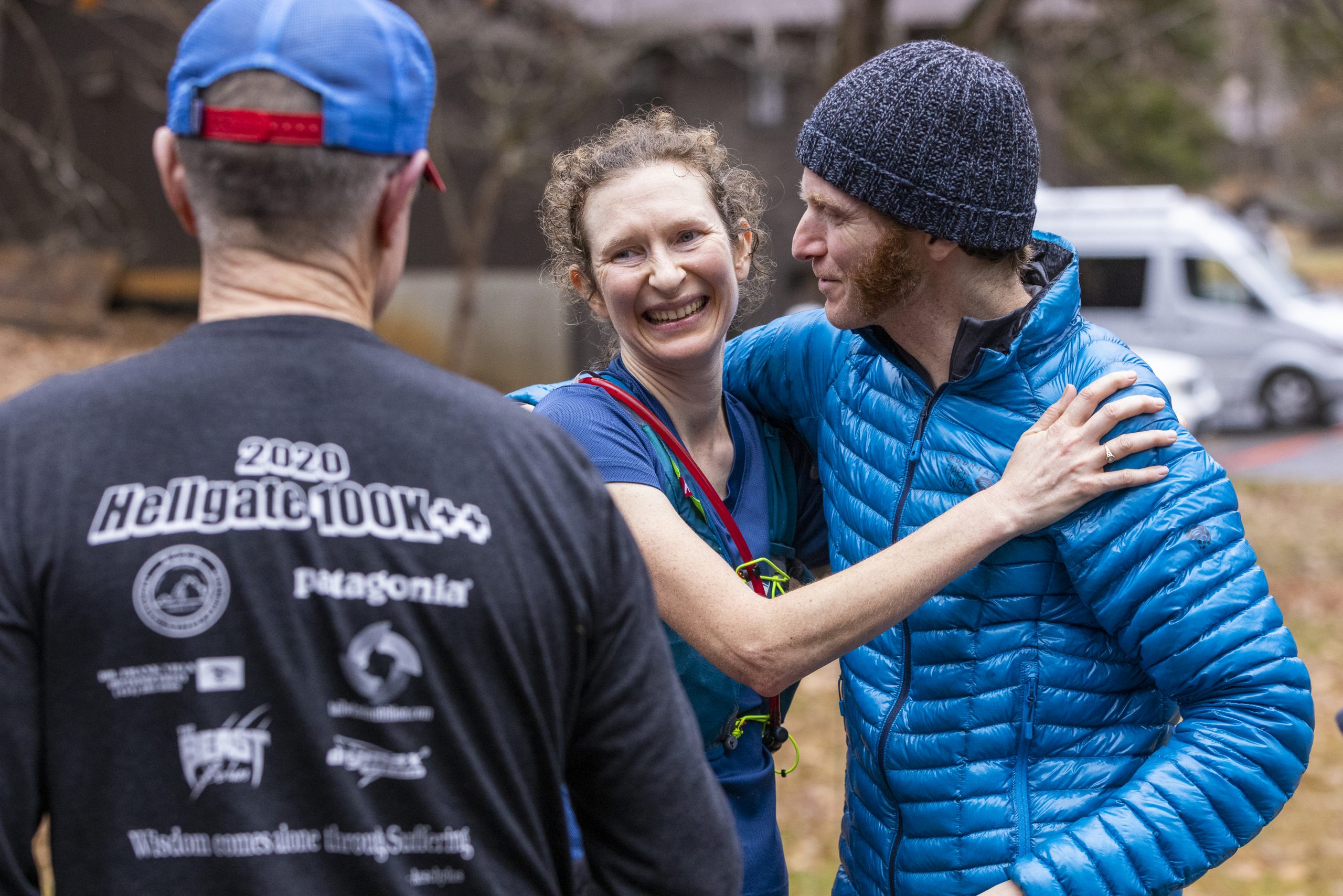
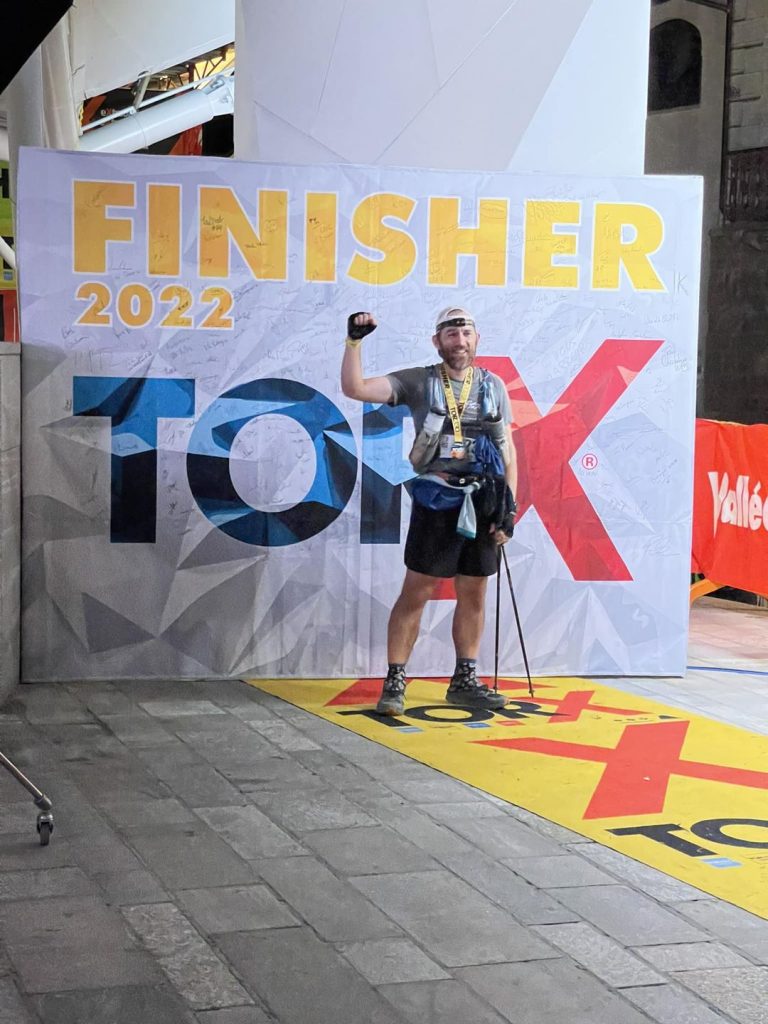
I have no data on my pace for my final 20 miles of Hellgate (recall I made Matt stop his Garmin), but Matt reports he counted 24 runners passed in my final push to the finish, not counting the ones lingering at aid stations. When I cross the finish line at Camp Bethel, I get a bear hug from Horton (after emptying my stomach in front of a large crowd). Horton does the math and announces I’m the 9th woman. I’m shocked. After years of envying Aaron’s luxurious Patagonia swag from Horton races, I finally earn my own. David Horton, the guy famous for drubbing the second place finisher as “first loser,” somehow makes me feel like a million bucks for finishing 9th.

I always look forward to Keith’s taunts at the end of the VHTRC Women’s Half Marathon, where my 8-time win streak is still intact.

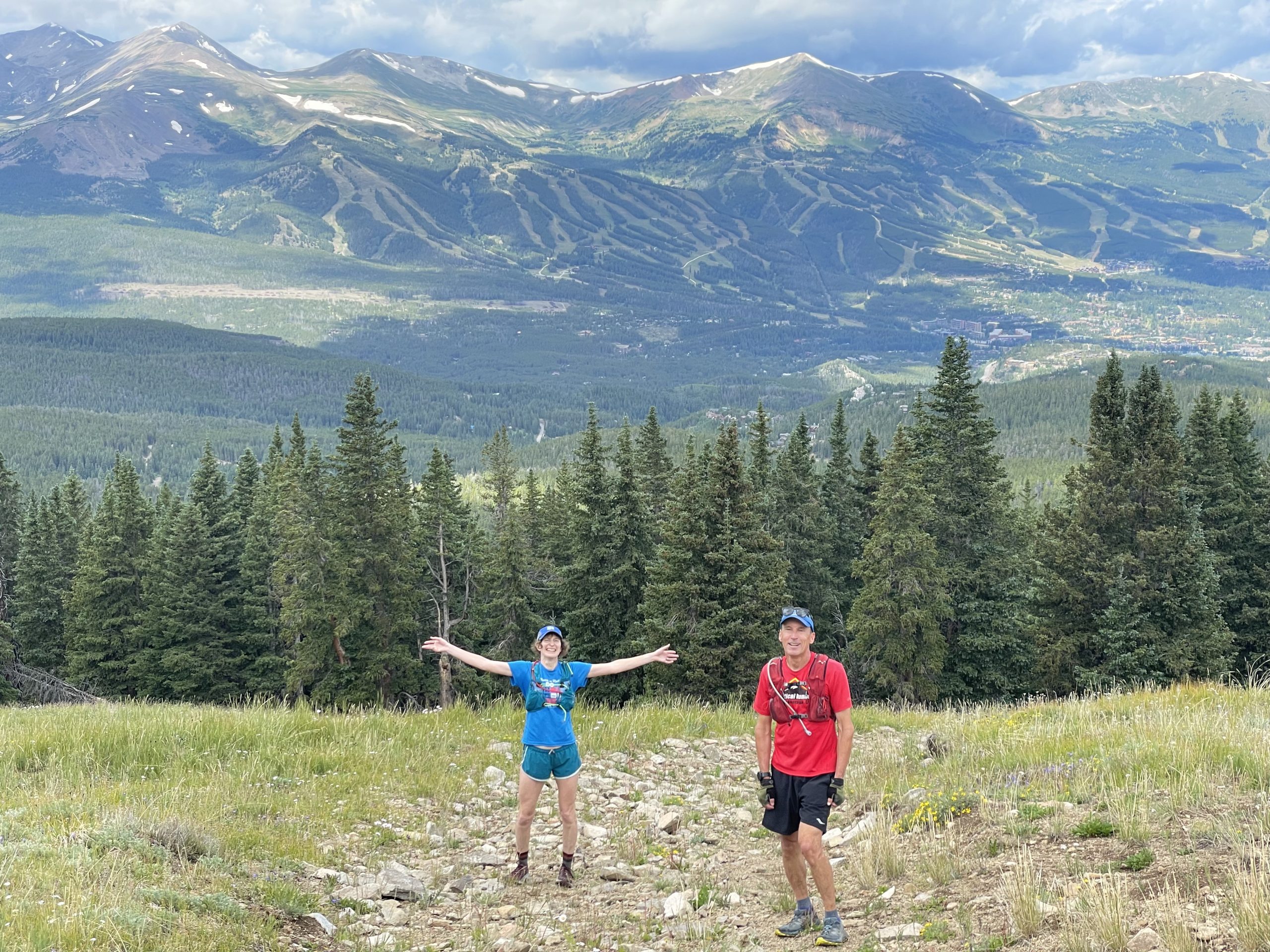
By “Gracefully” I Mean I Didn’t Cry and Whimper That I’m All Washed Up Since Having a Baby and Turning 40. I have a fear of aging. I got a chill in my spine ten years ago when my friend Sean warned me that my running would tank after age 37. That’s when everything went downhill for him. (Plus I had a baby at 37.) When I began running trails with Sean in 2008 he was one of the most decorated trail runners on the Beast Coast (the “Captain America” of the Virginia Happy Trail Running Club, I joked) and about to win his second Hellgate. Sean’s 11 years older, giving me front row seats to his transition into a master’s runner. First Old Guy, he’d quip. Last August Sean got front row seats to my own signs of aging when, for the first time in my life, I lost a trail half marathon race (my win streak was up to at least a dozen). In the old days, I gutted out wins at sub-marathon trail races no matter what, even if I was sick or injured (VHTRC Women’s Half Marathon) or went off course (Dam Half). To Aaron’s surprise, I took it gracefully when I finished 3rd in at the Run the Rockies Trail Half Marathon in Colorado last summer. Earlier that week we made a group decision not to taper for the race and instead keep up the high-flying high-altitude adventures that would torch our legs. A younger version of me would’ve been too race focused and skipped all those epic adventures. Her loss. I’m enjoying the freedom of running races without trying to win. Like Hellgate.

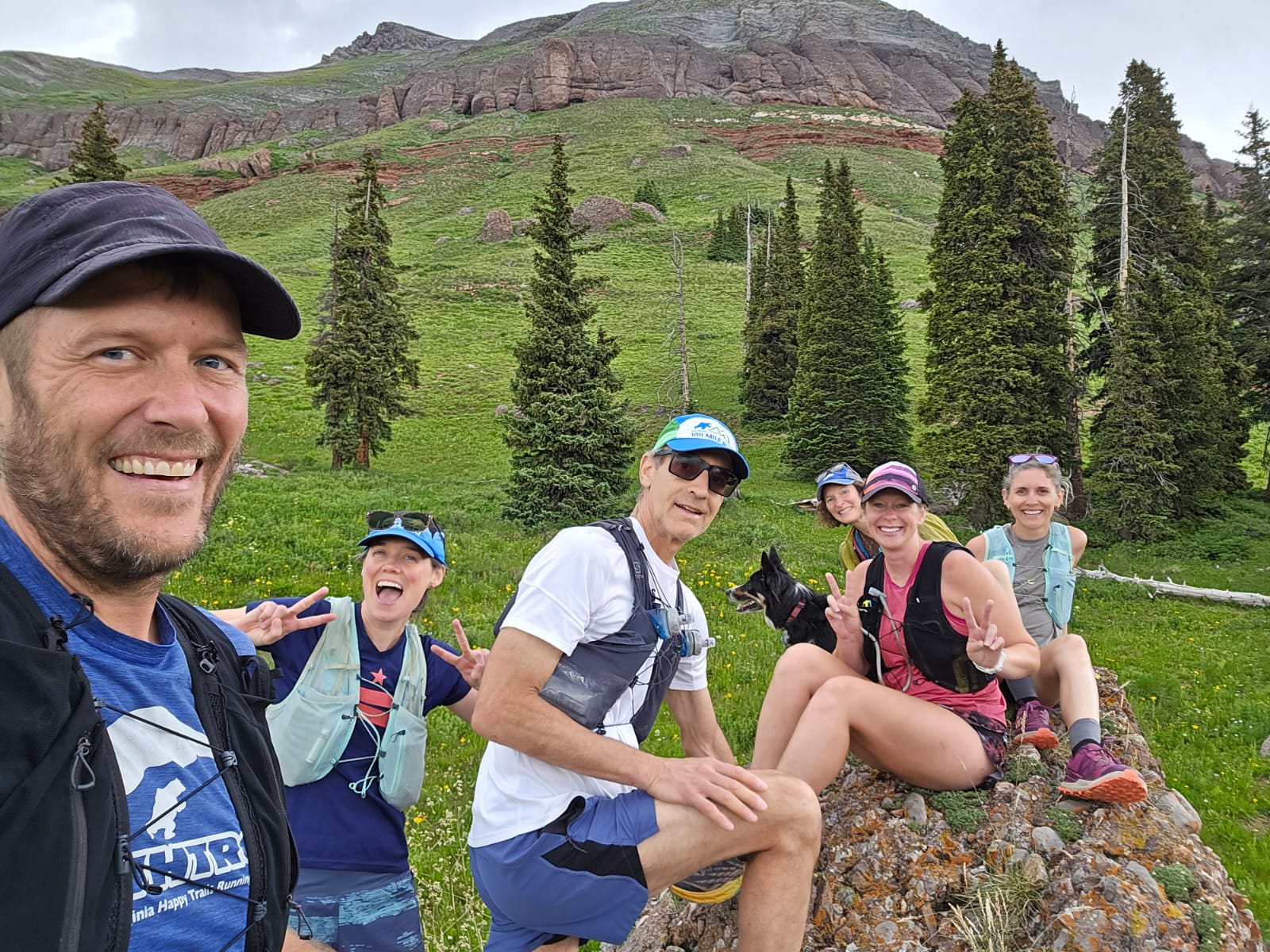
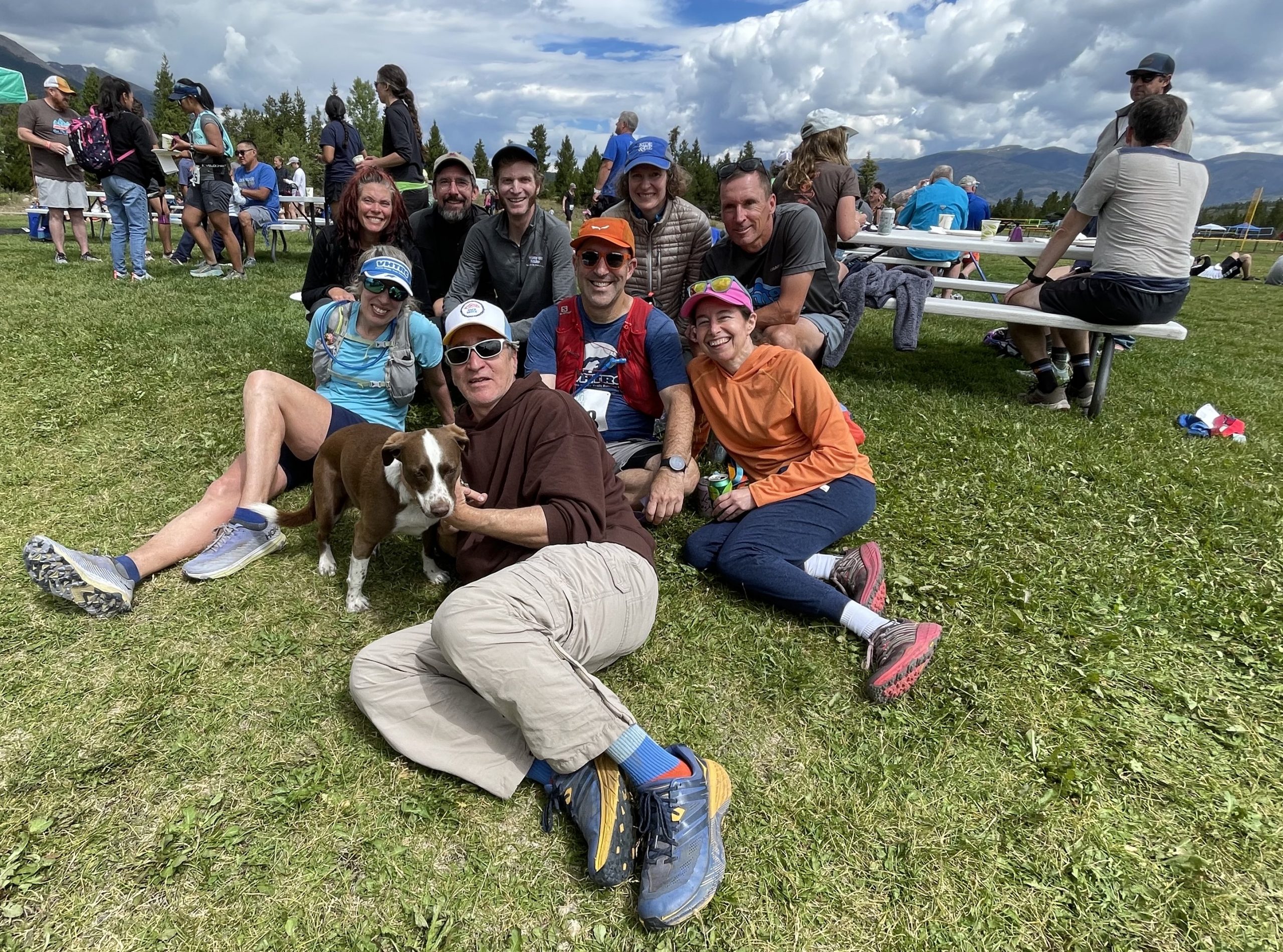
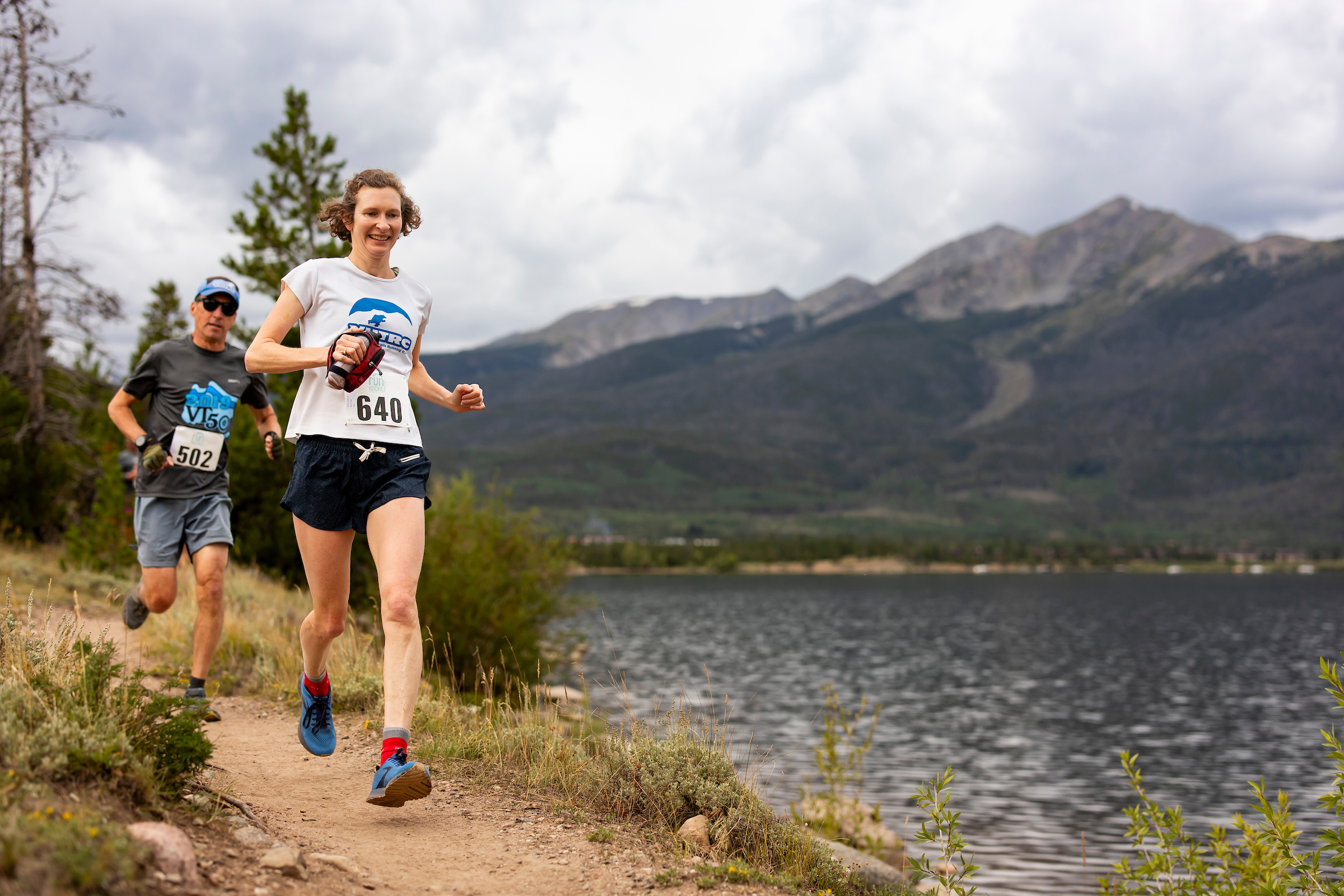
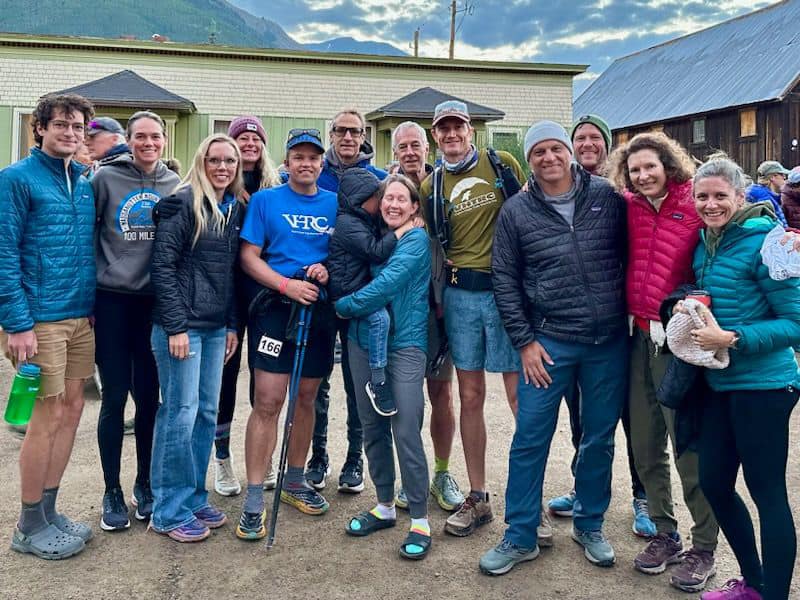
Current and former members of the Woodley Ultra Society converge in Frisco, Colorado, for the Run the Rockies Trail Half Marathon, with a combined 50+ Hellgate finishes, 3 Hellgate wins, 2 members of Hellgate’s “Fearsome Five,” 4 runners from the inaugural 2003 Hellgate, and 20 snide Horton remarks about ugly sideburns.

It Ain’t Over ‘Til The Fat Lady….Holds Something In Her Stomach. For most people, crossing the finish line at Hellgate marks the end of the journey and the beginning of recovery. My finish line is a tad blurrier. This year I was still vomiting 7 hours later. Driving home after the race, lying in the back of Matt’s van next to a plastic bag holding the remains of my vanilla milkshake, I had a moment of weakness and asked Aaron if it was time to take me to the hospital. Aaron assured Matt I was a pro and would pull out of my predicament eventually.

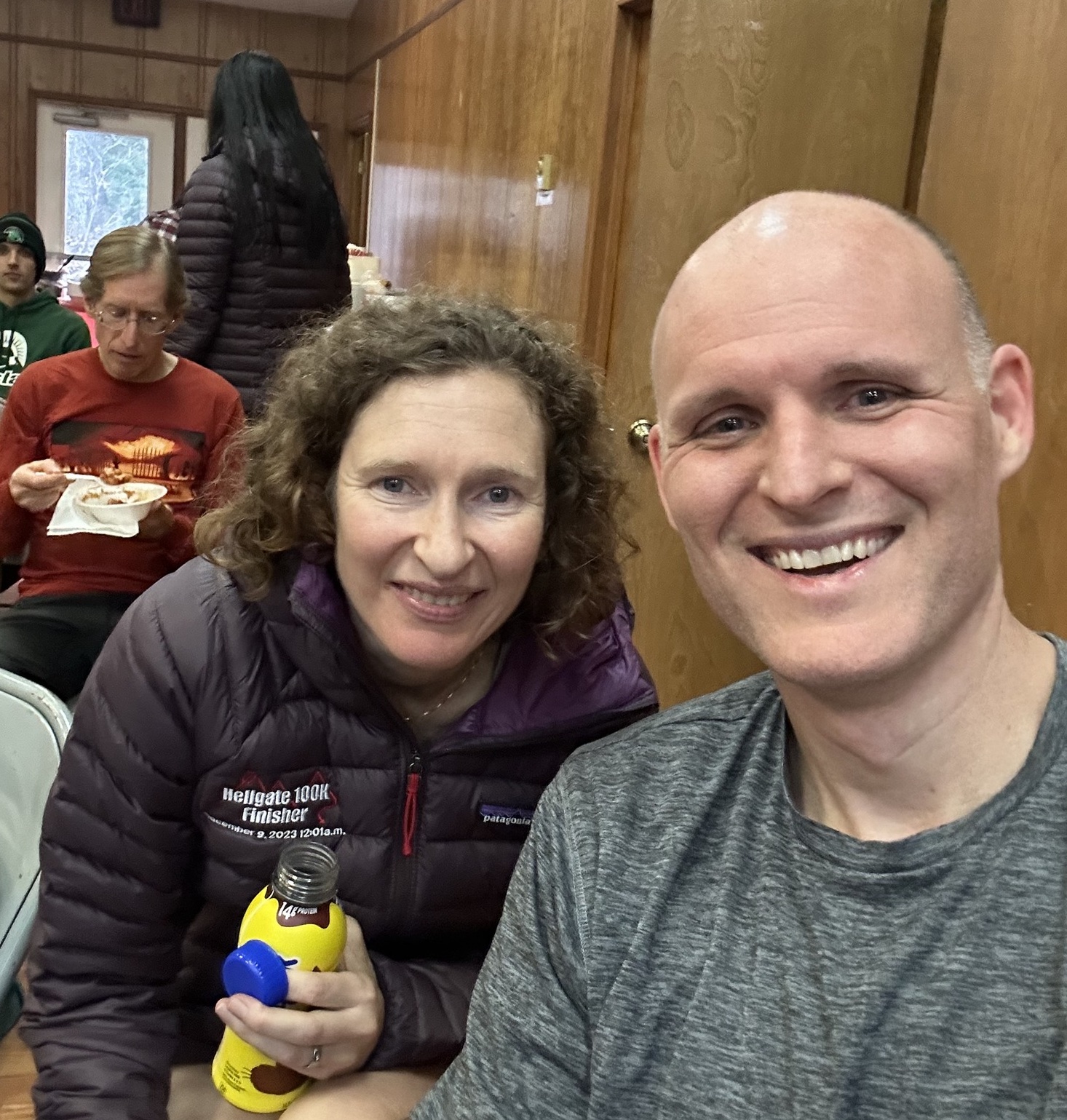
Matt and I at Camp Bethel during a post-race moment where I’m not puking. Not everyone “gets” Hellgate, but there’s a special kinship among the folks who do.

Holy, Guacamole! When we get back to DC at 10pm, I’ve gone 24 hours and 66 miles without a meal. Aaron asks me what my burning stomach lining might keep down. To his surprise, I gurgle Guacamole. He flashes a quizzical look, trying to figure out if I’m serious. I throw my head back and cackle into the clear cold night like a hyena. Fewer stars are visible here in the city. My body makes no sense!

Our Version Of Date Night. The Achilles that couldn’t make it through a 6 mile social run on Tuesday did 66 on Friday, and now the stomach that rejected saltines and chicken broth at the diner was devouring Mexican food — corn chips, guacamole, sizzling fajitas with steak, chicken, peppers, rice and beans. Aaron and I never do “date night,” so this is the closest we get, sitting in a Mexican restaurant, right near the door in case I need to puke, laughing as fajita juice dribbles down my forearm.

The Restaurant Staff Can Tell, Just From Our Plates, Who In The Couple Is Meticulous And Who’s Expulsive. Why can’t people stop running this race? I ask Aaron between mouthfuls. Can you think of any other trail race where five guys ran it 21 years in a row? Aaron admits he cannot. I use a napkin to mop up fajita juice drizzling down my elbow. I stare at my plate so I can pretend I don’t notice Aaron’s disgust at my table manners (he knows they come from my father). I fold another tortilla with a hastiness that leads to more holes and dribbles (Aaron was always better at origami-folding our son’s baby blankets). Aaron, one last question: why do YOU like Hellgate? It makes sense that like getting rocked around in Hellgate’s messy soup of chaos, but you crave order and stability. You don’t even like mud. Aaron, going on his 40th hour without sleep, wonders where women find the energy to keep prattling on. I let my question hang in the air. But I’ll circle back to it next year, keeping up my habit of overanalyzing. Maybe if I can crack Aaron’s unwavering commitment to Hellgate, I can understand why he still hangs around with me. By the end of dinner my plate has a blast radius.

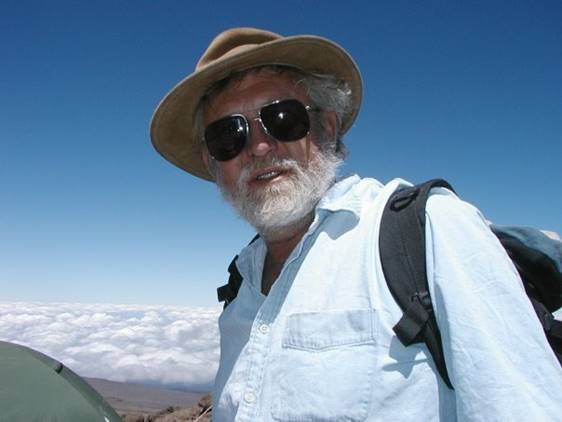
Picture from the Washington Post obituary: Robert Nelson at the top of Mt. Kilimanjaro, July 2002. Nelson was a professor at the University of Maryland and an author who wrote about belief systems and policies often thought to be in conflict. He died December 15, 2019 at a hotel in Helsinki, where he was attending a conference. He was 74. (Family Photo)
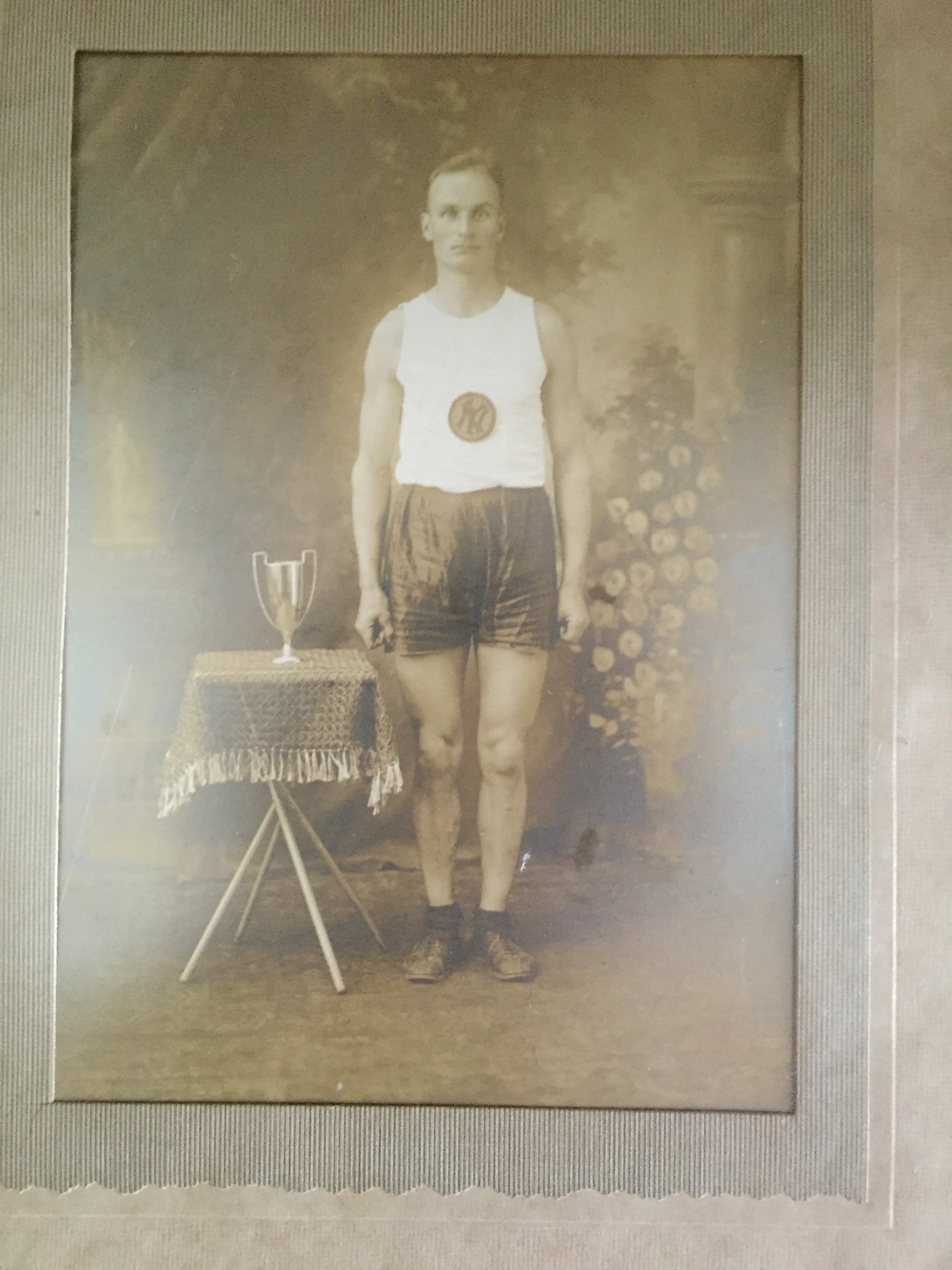
Onni Palonen, my great-grandfather, lived in Boston but spoke only Finnish. In the 1920 and 30s Finns (like Olympic gold medalist Paavo Nurmi) dominated distance running.

R.I.P. My father died three years before I ran Hellgate the first time in 2021. He would have been dumbstruck that his delicate daughter could survive 66 treacherous miles through rugged mountains in winter. He never ran any races himself, but his Finnish grandfather, my great-grandfather Onni, was a professional distance runner in Boston in the 1930s. Onni’s brother Laurie ran the Boston Marathon back when it was a fringe race for a small gaggle of Boston rebels (only men of course). Onni, like me, had running talent but struggled with illness and died of tuberculosis as a young man in his 30s. Up in the stars, I imagine Onni and Laurie clinking iittala glasses of Finlandia vodka on ice, watching Hellgate and marveling how the sport of running has transformed beyond their wildest dreams. Onni and Laurie are the only members of my blood family who might comprehend the draw of Hellgate. Pity they’re long gone. Fortunately, I’ve got Aaron, Matt, Sean, and the WUSsies. As Bjorn showed me, there’s the family tree you’re born with, and the family tree you draw.

WUS awards 2022

Best WUS Rookie: Mike and Anthony

Best WUS recruiter: Nick

Worst WUS Race Experience: Aaron, Wisconsin Ironman

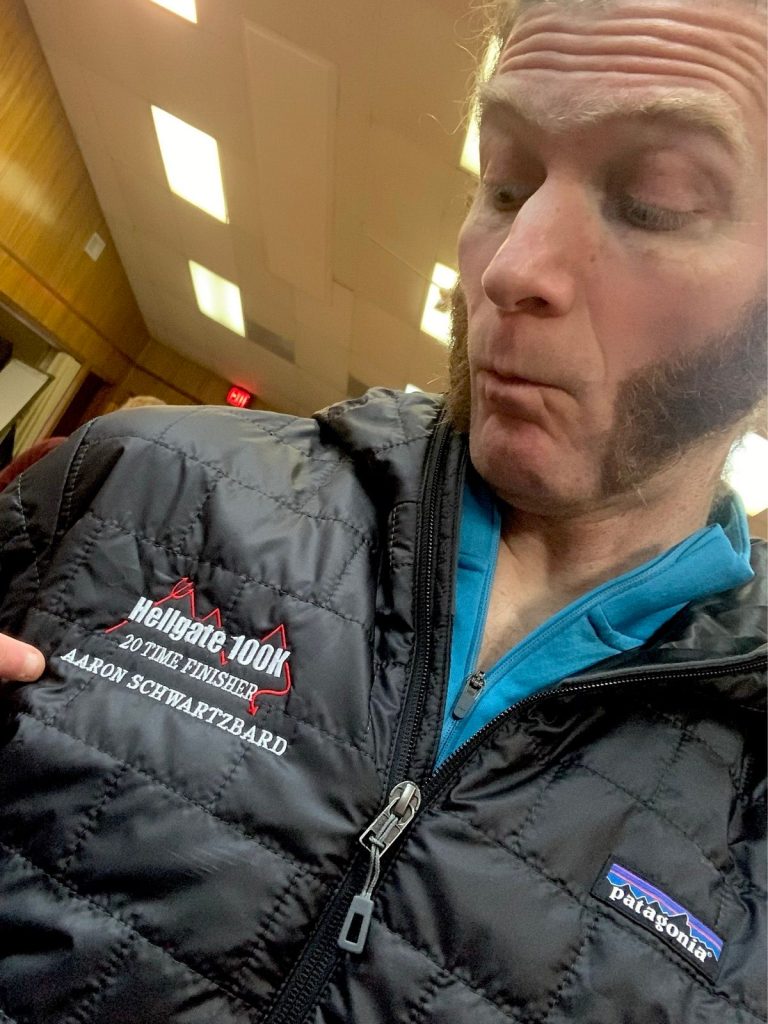
Best WUS Milestone: Aaron, 20 Hellgates

Best WUS Alum Surprise Visit: Nate

Best WUS performance: Garret, Tor des Geants

Best WUS bait and switch: Trevor, Tor de Geants

Best WUS Extramural Event: Beer Mile

Worst Beer Mile Handicap: Trevor

Best new WUS adventure: Martha, ride ‘n’ tie

Best WUS hook up: Sue’s NSO tix

Best WUS bird visit: Rock Creek Bald Eagle

Worst WUS bird visit: Rock Creek Barred Owl flyby

Proudest WUS moment: when CPBG staff still knew the Aaron pizza

10 Predictions for 2023:

(1) Trevor will not run MMT.

(2) But Trevor will win another Beer Mile.

(3) Aaron will go another year without showing up at WUS.

(4) But Aaron’s friend Matt will come in his stead.

(5) Wussies will get VHTRC Sundays in the Park runs going again.

(6) But only the ones at Pierce Mill.

(7) Jaret will organize a Donut Run.

(8) But approximately one year after he said he would.

(9) Martha will do a new WUS shirt order.

(10) Translation: Aaron will do a new WUS shirt order.

Ride ‘n’ Tie: The Wildest Trail Race You’ve Never Heard Of

Fair Hills, Maryland, September 2022

From left to right: Janice, Kevlar (horse), Courtney, Bobby (horse), me

Seen a guy running in a bike helmet? The women on horseback shook their heads. My eyes widened. I was on a horse I’d never ridden before, looking for a man I’d just met, along a vast network of trails I’d never treaded, competing in an unusual sport I’d only tried once before. The other horsewomen were competing in the standard 25-mile endurance ride where riders stay on the horse, or at least try to. Chris and I were doing a two-sport hybrid called ‘ride ‘n’ tie’ where two partners share one horse and alternate between trail running and riding, leap-frogging each other and tying the horse to random trees between transitions. The sport was invented in 1971 by a young California marketer at Levi Strauss & Co wishing to showcase the American jeans company’s quintessential rough-and-ready cowboy image. I had just swung into the saddle when Chris went missing somewhere along William duPont Jr.’s former 5,600 acre fox hunting estate, a verdant paradise of wooded trails, open galloping fields, and bubbling creeks situated at the crossroads of Maryland, Pennsylvania, and Delaware. As I wheeled Ray around to retrace our steps, the horse shook his chestnut mane in rebellion and flared his large Arabian nostrils. Ray had more ride ‘n’ tie experience than Chris and me combined; he knew I had no idea what I was doing.

A few days before the Chesapeake 25-mile endurance ride, Chris’s original ride ‘n’ tie partner came down with COVID-19 and I filled in last-minute, with the barest qualifications. Living in Washington, DC, I hadn’t ridden a horse in months. In fact, I hadn’t ridden a horse consistently since I was 13. Now, in my forties, I was a competitive trail runner, recruited by a horse friend to try my first ride ‘n’ tie in July 2022 in Virginia’s Shenandoah mountains. Halfway through the 20-mile race, I learned why some dub the sport “ride ‘n’ die.” After miles of slogging through mud, rocks, roots, and streams, the trail dumped out onto a long dirt road where horses could open up their stride. When most people think of race horses they think of Kentucky Derby thoroughbreds, but Arabians raced long before their sprinting brethren, bred by Bedouins thousands of years ago in the Middle East for athleticism, speed, and remarkable stamina. Bobby could sprint when the mood struck him. Once he spotted a rival horse Kevlar cantering ahead on the road, Bobby jetted off like a bee stung him. The two Arabians raced neck-and-neck, goading each other on. Bobby accelerated into speeds I’d never felt in a horse. It was thrilling, but my smile turned upside down when I realized I had no control of the runaway locomotive. Whoa, I commanded in a low voice, trying to project calm. But it was no command. Ride ‘n’ tie bridles lack the metal bits found in English and Western bridles so the horses can eat and refuel, drastically limiting the power of the reins, which merely tugged on his noseband. Bobby shook his head up and down, left and right, bouncing me out of the saddle as we tussled for control of his head. Dark thoughts spun through my mind. The last time I lost control of a bolting horse, I landed on my head and blacked out with a concussion.

An important lesson from childhood was that if you can’t stop a bolting pony, turn it. Preferably towards an immovable object, say a fence. Even the wildest pony will stop short before crashing and injuring itself. Of course, there were no fences out in the Shenandoah mountains to drive Bobby into. After the longest minute of my life, I managed to whip Bobby sideways into a hillside on the side of the road, like a cowgirl cornering a quarter horse around a barrel. No stopped short and I shimmied off his back, declaring I’ve had enough of this nonsense. Courtney, Kevlar’s rider, hooted a hearty laugh; our race-within-a-race was solid fun for an experienced rider on a familiar, trusted horse. My trembling hands tied Bobby to a sapling that hardly qualified as a tree. I dashed down the road, savoring the feel of solid earth beneath my feet again. For once, running served to bring my heart rate lower. Over the next half hour, the sun slid behind the mountains and I rode the final miles by headlamp, the melodies of the forest coming alive under the stars. Whippoorwills echoed eerily through the darkness and barred owls caterwauled in a dreamlike trance. I wondered how I could convince my trail running friends to ever try this magical mayhem.

Few trail runners know how much they owe to ride ‘n’ tie, which played a central role in the birth of ultramarathons. The world-famous Western States 100 mile trail race was invented in 1974 when the plucky Gordy Ainsleigh had a ride ‘n’ tie horse go lame and completed the 100 mile endurance ride on foot. The rest is history. Trail running and ultramarathons ballooned so fast in popularity that top athletes get prize money and amateurs wait years to win entry to Western States through the lottery. Why did ride ‘n’ tie stay fringe and miss the trail running boom? Horse sports are more dangerous, more expensive, and people with horses generally prefer to ride them, not run after them. Trail runners interested in trying a ride ‘n’ tie can connect with horse owners through Facebook groups. Ride ‘n’ tie is a friendly and welcoming community that helped me overcome imposter syndrome. But, as I well learned, running muscles are different from riding muscles, focused in the inner thigh, and saddle sores burn like hell. Despite these barriers, the sport is addictive for a small, diehard following of adrenaline junkies lining the East and West coasts. If long mountain runs are the ultimate test, imagine throwing a horse into the mix.

At last I found Chris! He’d missed a turn and was grateful I’d wheeled around to search for him; otherwise, he would have run the whole course on foot. Today’s course had no mountains to climb, but the forest trails were twisty and narrow, with short lines of sight and sudden turns. Intersections were marked with blue ribbons dangling from trees that were difficult to follow at high speeds. Chris and I endured several more cycles of getting lost and reuniting. Ray endured near-misses with mountain bikers and off-leash dogs. It took a lot to razz Ray, but we found it. A pair of bowhunters were smeared in camouflage paint, with long pointy arrows slung over their shoulders. Ray reared, swerved, and snorted. I couldn’t blame him; the painted faces looked like cannibals.

We were finally out of the woods when Ray began limping through the meadow like a car with a flat tire. I wondered if an injury cropped up when he dodged the cannibal archers. Fortunately, a hoof inspection revealed that Ray merely threw a shoe, a problem remedied by a rubber boot Chris pulled from the saddle bag. Game on.

Running was supposed to be my strength, the one thing I could count on, but as the morning sun rose over the open meadows, I began to overheat. There is no right way to dress for a ride ‘n’ tie, just different degrees of wrong. The event is not a pampered triathlon with designated transition zones for swaps into suits tailored for each sport. Ride ‘n’ tie transitions are too fast and frequent to change stirrup length, let alone pants. In the tradeoffs between bodily protection on the ride and heat dissipation on the run, I picked protection. I wore tall soccer socks layered under winter running tights to protect my inner calf from saddle sores and enveloped my skull in a thick padded riding helmet to prevent a second concussion. Possibly I could have pulled it off, had it not been for one serious miscalculation. Silly me thought the water stops along the course were for runners, so I didn’t carry my own bottle. I’ve never come so close to drinking from a horse trough. As severe dehydration set in, I got wobbly. Chris noticed my head bobbling like a drunk and pulled another race-saving item from the magical saddle bag. I drowned his spare bottle in one gulp. Ray, who’d rebuffed every drinking opportunity at stream crossings (he thinks he’s a camel, Chris explained), finally arched his long neck and drank his fill.

Ray was stalwart all day, braving one obstacle after another: cannibal archers, lost shoe, lost runner. He leapt over creeks and picked his way over fallen logs. But those obstacles he could see. For the day’s final challenge, Ray had to blindly trust the rider on his back while he crossed a thin concrete bridge over a highway with zooming trucks screaming under his feet. When the first truck sent Ray dancing sideways, I looked down and wondered if scared horses ever jump off bridges. Ray collected himself and padded across to the finish line. By some measures, Ray’s ride ‘n’ tie victory was easy; there was only one ride ‘n’ tie horse to beat. But Ray was handicapped by directionally challenged riders, footwear malfunctions, and a frightening array of hunters, bikers, canines, and vehicles. Ray was a champion.

I could have spent all afternoon grazing the horses, sponging them down, feeding them treats. As a kid I treated the ponies like pets, nuzzling their velveteen noses and braiding their manes and tails. But now I had adult responsibilities, and my son’s school barbecue began at 3pm. Other parents hovered over their kids on the playground like china dolls, ready to snatch them if they slipped. I sat back on the bench and watched my four-year old play, his mop of bright blonde hair gleaming in the sun. You can’t bubblewrap a kid who’s already discovered skiing, mountain biking, and rock climbing, but you can impart lessons. Horses taught me so much as a kid — how to be tough, but gentle; fearless, but never reckless; and be a good teammate with a powerful animal who communicates only through body language. Someday horses will teach my son more than I ever could.

Next year, in September 2023, the 50th Ride ‘N’ Tie World Championship will kick off in Asheville, North Carolina. I hope to be there, if someone’s willing to trust me with their horse, ready for whatever misadventures come our way. Even if I’m not, my running trails feels wilder and full of possibility after the summer of 2022, just knowing these zany American sporting traditions persist, sustained by a hardy few.
Hellgate 100k

Hellgate 100k++ Saturday, December 11, 2021 12:01am. Fincastle, Virginia

Results

This year’s Hellgate starting line

The Race I Promised My Mother I’d Never Run

No one was more shocked than my husband when I announced my plan to run Hellgate this year. For more than a decade the Wussies have been needling me about when I would join Aaron at his signature event. Hellgate begins at midnight in December and winds 100+ kilometers through southern Virginia’s Blue Ridge mountains, often at subfreezing temperatures and over loose ankle-breaking rocks hidden under piles of leaves. Aaron is one of the “Fearsome Five” who have run the race every year since its inception in 2003 (the streak is now at 19). It’s not just a race for him, but an end-of-year purification ritual.

What will Horton will give for Aaron’s 20th?
My MGM attire

But just the mention of Hellgate made me shiver. Every winter I dreaded watching Aaron limp off to his green Jeep Wrangler and drive off to the madcap race that destroyed him. When I started dating Aaron in 2011 he was unknowingly infected with Lyme disease. His suffering came and went in waves much like the COVID-19 pandemic. He developed strange symptoms like heart palpitations, skin peeling, rashes, and bursitis in his heels. We had no idea what was wrong with him. By 2013 he struggled to get out of bed in the morning. In the weeks leading up to Hellgate I would shake my head and warn him, as his medical expert girlfriend, of the risk of permanent damage to his system. But I knew not to stand in his way. To take my mind off his suffering I would join friends on bourbon-fueled trots along the Bull Run trails at the VHTRC Magnus Gluteus Maximus 50k fatass. The party ran all afternoon at Hemlock and every time my mind drifted back to Aaron struggling to stay upright somewhere in southern Virginia I just drowned another swig of bourbon.

MGM is so much fun!

Aaron eventually got his Lyme disease diagnosed and treated, with a little help from an infectious disease expert girlfriend who bulldozed through an incompetent medical system. (If another doctor tried to pull on me that Aaron was just getting old and can’t run long distances anymore I would have punched them in the face.)  After six weeks of doxycycline Aaron recovered from the acute symptoms of Lyme, but continued to experience bouts of exhaustion, chronic heel pain, and skin peeling. It did not help that he was overworked and overstressed, juggling a day job as a software engineer while launching a new technology start up. I was nervous about starting a family, fearing the sleep deprivation and stress of raising a baby would trigger a relapse.

Aaron still doesn’t know he has Lyme at Highland Sky in 2012.

But in 2018 our son Bjorn arrived, with bright blue eyes and platinum blonde hair. After years of me watching Aaron suffer, the tables turned and Aaron had to watch me come undone. I’m not sure what is worse, to be the sufferer or the helpless onlooker.

Kids are worth it. Even when you feel like you’re being raked over the coals.

Over the Baby Bump

I knew starting a family would be a challenge. I was trying to do something few women pull off. There are few female scientists in my field to begin with (I study computational biology, a cross between molecular biology and computer science), even fewer who are group leaders, and exceedingly few who have young children. The mothers who do survive in my field do so because they have extra supportive bosses. I had the opposite.

I lost my job as a research scientist at the National Institutes of Health in October 2020. I had worked there 12 years without incident, led a highly productive team, and was particularly valued when the pandemic hit because I use genetic data to track SARS-CoV-2 evolution. So my dismissal caused a stir, internationally. The community of infectious disease epidemiologists is small and tight-knit and the big name professors in my field offered to write letters to NIH leadership to protest my termination. Against signs of resistance, my boss had to cover his tracks fast. So he made up stories, falsely claiming I was terminated because I was in trouble with HR for harassing colleagues. I waved my spotless HR record around like a white flag to clear my name, but leadership looked the other way. People rise through government ranks by stepping on women, not sticking out their necks for them.

Suddenly I understood why so many American women quit science, especially after starting families, and my sudden unexpected job loss launched me towards the door. I told Aaron I wanted to move to Scandinavia, where my ancestors still live and mothers are supported with maternity leave, free child care, and tend to stay in the workforce. But being a distance runner for the last twenty-five years helped me understand the natural cycles of downturns, as I chronicled in an essay called “Over the Baby Bump” published earlier this year in Science magazine. Here’s an excerpt*:

I realized I was in danger of repeating a past mistake of quitting prematurely instead of giving myself time to adapt. Twenty years ago, I was a promising high school distance runner, with a boyish frame that helped me capture title after title. But during puberty I temporarily got fleshier and slower. Dieting and intense workouts only accelerated burnout until I gave up and quit, feeling broken. Years later, I dusted myself off and began trail running in the mountains. When I finally joined the college track team, I raced faster than ever and proved I did not need to be a flat-bodied pixie, I just needed time and space for my changing body to adjust. I have not stopped racing since.

I’ve learned, twice now, to keep lacing up. The pandemic was my tipping point as a working mom, but I survived by reaching out to savvier women who gave me perspective. I’ve now secured a better position at another branch of NIH that maintains my research independence while offering greater job security. This fall I’ll be heading to my new office just as my toddler begins his first day of preschool. Other kids will surely push him down and snatch his toys. But I’ll let him know the same thing happens to his mom, and we dust off, redirect, and embark on new adventures together.”

* I had to do a fair bit of sugar-coating to fit my essay on the one print page Science allotted me. More details about my struggles as a high school runner are available in previous blogs, as is the trauma I experienced during the pandemic.

There’s a Book For That

Getting canned taught me several lessons. First, I discovered how strength I derive from distance running carries over to everything I do in life – my career, my family, my friendships. Getting pushed off a cliff by my boss temporarily made me feel weak and helpless, but this just drove me to get stronger. Being a female scientist does not get easier as you advance. You either quit or get tougher. Ultrarunning offers a path forward. And I knew just the race.

The second lesson is that women trying to do difficult things need support, sometimes quite a bit of support, and asking for help is not a sign of weakness. After I lost my job a group of amazing women scientists rallied around me and Zoomed every week until I was back on my feet with a new job. People are generally happy to help, especially when you’re a person of action and they get to be part of the rebound (that’s not what I meant, you dirty reader!).

Ashlinn is one of my scientist friends who helped me get back on my feet

I also learned that you can pay for help. There are specialized therapists with PhDs who can mend your brain the same way an orthopedist mends a broken leg. I discovered in pregnancy there are experts for virtually everything, even pelvic floors, and hunting for the right expert can end a lot of suffering. New moms needn’t resign themselves to living with anxiety and depression, or wearing pads the rest of their lives.

I also learned there is a body of scientific literature on nearly every topic. One day when I was trying to figure out why my boss soured on me I googled “People who ruin your life” and discovered books and scientific studies on the ~10% of Americans with known personality disorders (borderline, narcissist, psychopath, etc.). Suddenly everything added up. My boss’s behavior fit a well documented pattern. Before you freak out about the possibility that 1 in 10 of your friends and family are psychopaths, recognize that most people with these disorders (including my boss) are highly personable 99% of the time and easy to work with. They selectively target people (often their spouses). But they cannot be effective liars/manipulators unless they are charming and win people to their side first. Last thing, if you begin to worry that you might one of these personality disorders because sometimes you charm or play victim cards, don’t worry, the defining feature of these conditions is an inability to be self-aware or self-question.

The third lesson I learned was that I picked a good husband. When I fell off the cliff Aaron had to mop up the bleeding. Between the pandemic, the toddler, and the boss from hell, our marriage was seriously stress-tested. It passed because I learned how to follow Aaron blindly each time I slipped into darkness. I learned to trust him. So when he said I could finish Hellgate, even without much training, I just nodded.

Still, practically speaking, I was scared shitless of Hellgate and needed one more thing: a friend I could depend on, even when things got messy, the type who holds your hair back while you puke.

Normal social support evaporated during the pandemic. But you never know who in your vast social network is going to rise to the occasion when you need them most.

The Lapointes

Matt and his boys at our wedding in 2016

Aaron did 17 Hellgates without crew. But in 2020 he couldn’t get a ride to the start of Hellgate in a car of strangers and or crash for the night on the couch at Camp Bethel without breaking our six-person family COVID bubble that included our son’s three high-risk elderly grandparents. He needed a trusty chauffer. So Aaron called on his childhood friend Matt Lapointe. Matt is dependable, understands science, and was upvoted unanimously by all six members of our family bubble.    
This time I didn’t feel pity when Aaron packed his bags for Hellgate, but envy. I, the one with high social needs who was really suffering in our restricted pandemic bubble, was left behind as Aaron indulged in a weekend road trip with the boisterous Lapointe boys. Running 100 kilometers seemed a stiff price of admission for a weekend getaway with friends, especially at a time when I was barely running, depressed, and unable to get my heart rate above 150. Still, I wanted in.

When Matt returned I got to see Hellgate through the fresh eyes of a non-ultrarunner. Matt didn’t paint Hellgate as a sadistic event designed to maximize monstrous weather, sleep deprivation, mind-numbing terrain, and stupid water crossing at mile four to get frozen feet. Matt just saw Hellgate as awesome, a wild romp of an adventure against varied and unpredictable elements. He and his teenage sons were enthralled by the later sections of the course they ran with Aaron. They couldn’t wait to crew again in 2021.

Luray International Triathlon, August 2021

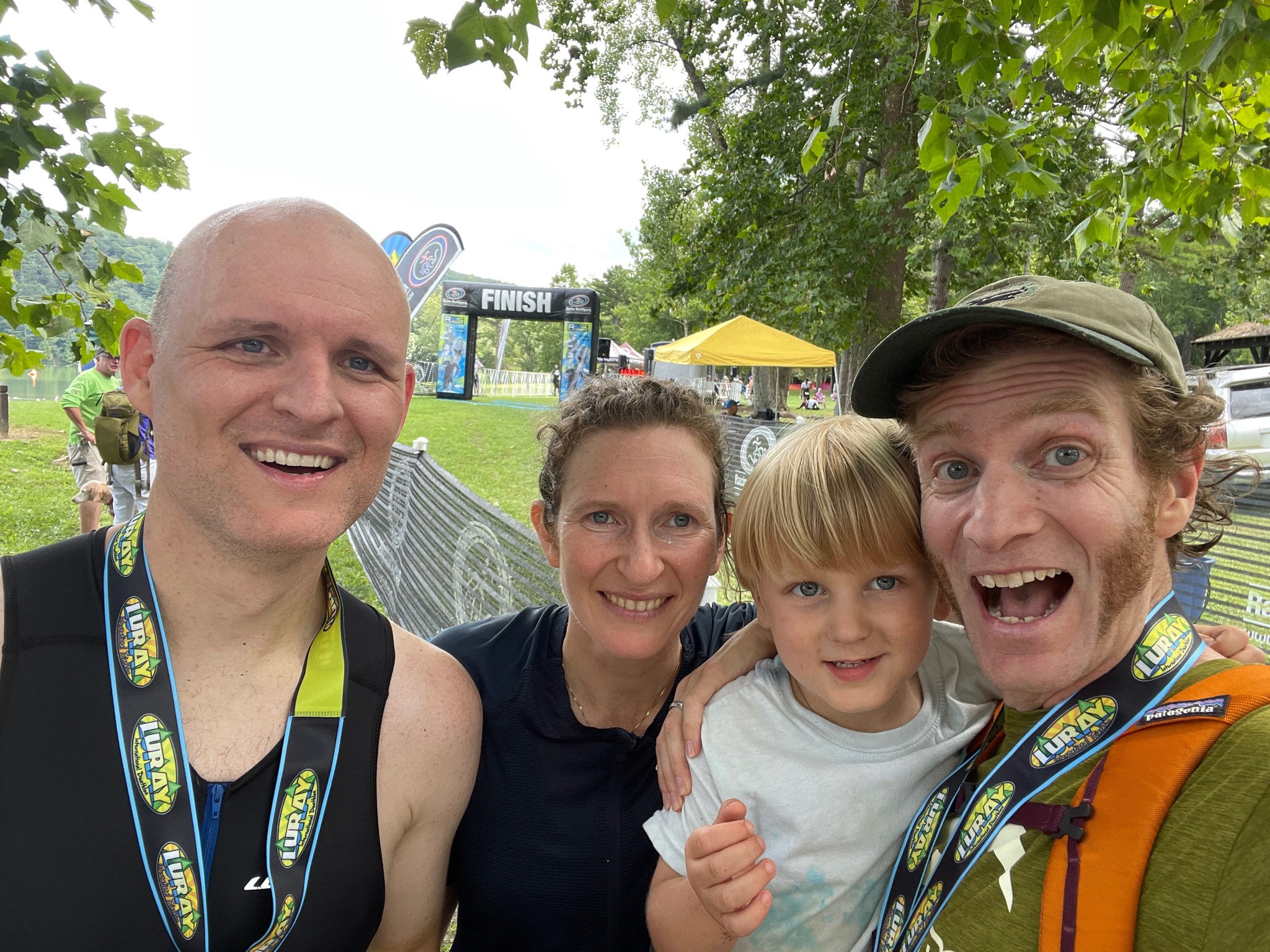
Hellgate left such an impression on Matt that he resolved to pursue his own lifelong dream of running a marathon, which was put on hold during two decades of raising a three-boy family. Aaron and I became Matt’s unofficial coaches, tailoring his marathon training plan. Matt probably didn’t realize it, but he was the one helping us. During the spring of 2021 Matt was the first person Aaron and I ran with during the pandemic. My depression started to lift as we laughed and snorted on the Glover Archibald trails. By August 2021 we all did the Luray International Triathlon together. My heart rate was finally back up again.

In November Matt achieved his goal of finishing the Richmond Marathon in under 4 hours

Bring in the Professionals

I ran my first ultra in 2009 on a dare. I had just moved to DC and discovered a group of ultrarunners living next door. I joined their death-defying Tuesday night trail runs simply because I was lonely in a new city. And I liked the post-run part where we drank at Cleveland Park Bar and Grill until we started making poor life decisions. One June night I was talked into running the Laurel Highlands 50k that upcoming weekend with Keith, Amy, and Mitchell. I set a course record. After that, I reflexively shot down anyone who tried to coax me into running another ultra. Whatever the opposite of “hooked” is, I was that.

The Wussies were mystified by my lack of interest in Hardrock, Western States, MMT, or other mythic quests they dangled before me. I had the natural endurance to run Catawba and other ultramarathon fatasses when tricked into believing we were going shorter. There was an obvious gulf between what I could do physically and what I thought I could do.

The gulf formed when I was fifteen out of self-preservation. My rookie cross country season I won the state title and suddenly the screws were put in. I had a complicated home life, which I’ve written about previously. I shut running down out at the end of high school because I was mentally and physically destroyed. I returned to run on my own terms in college, earning All-America, and took up marathons in grad school. But I refused to train, wear a watch, or focus on a goal race. Aaron discovered I was willing to bumble around in the woods for hours, chatting and stopping for mushrooms and woodpeckers. I raced fiercely when the mood struck me. But as soon as Aaron referred to something as a “training run” I stiffened. That was not me anymore. Over the last twenty years any success I had at races was despite myself.   

But the pandemic gave me no choice: begin therapy, fight demons, or lose everything. It is not a coincidence that I signed up for Hellgate the month after I graduated from a 9-month course of cognitive behavioral therapy. Yes, I’m sure people find it hilarious that I regard running 66.6 miles as a sign of improved mental health.

A Fluke of Timing

Had the Hellgate application arrived any month other than October 2021 I would not have applied. I ran a grand total of zero races in 2020, when I was depressed and barely running. My depression began to lift in May 2021 after I got vaccinated and began to spend limited time with friends again. By September my son was finally enrolled in preschool, I ran Big Schloss 50k, got a new job lined up, and I completed all my major therapy goals. In early October I sent in my Hellgate application. I doubted I would be accepted, but everyone was convinced Aaron had an “in” with race director Dave Horton.

But Matt and I share a weakness for soccer. One night a new guy showed up at WUS named Vivian who played on a DC coed soccer team. I knew I was in trouble. I love soccer and only don’t play anymore because I always get injured. But I’ve had so few indulgences during COVID, I thought I could get away with just one game on Halloween morning. While I was playing I was high as a kite and it was totally worth it. I was beaming for days. But in the process I predictably gummed up the same Achilles I injured playing varsity soccer in college. The tendon wasn’t wrecked, but I did have to scratch every training run left on the calendar: Potomac Heritage 50k, Richmond Marathon, Vicki’s Death March, even the Alexandria Turkey Chase. The week before Hellgate I feared I would have to scratch my goal race too.

Show Time

Wussies at the starting line

On race day I had serious doubts about my fitness. I had only trained a couple weeks from late September to mid-October. The pandemic, motherhood, and losing my job had robbed my sleep and ground me down over the past two years. Given my condition, was this really the year to attempt the race that chewed up my much stronger husband?

But my Achilles was quiet, the weather was unseasonably warm, and I had much to be thankful for. Standing on the starting line in shorts, I whispered to Aaron that even if the race was a bust I was proud of myself just for lining up and starting. Knowing how much resistance I had overcome just to get there, he heartily agreed.

Aaron tried to give me some last-minute tips about the course. No one knows more about the ins and outs of the Hellgate course than Aaron. Apparently Aaron has written a detailed race report chock full of helpful details that people rave about. I have never read it. I like to run blind. (Aaron did finally succeed in convincing me to wear a watch for data collection but I refuse to look at it.) The only thing I remembered from Aaron’s repeated attempt to dish me Hellgate intel over the last few months was that (a) there were pierogis somewhere, (b) there was a big climb and then a big downhill to the finish, (c) not to stop at aid station 4 because it’s cold, (d) not to use the rocks to cross the stream because I’ll slip and fall in, (e) not to go too fast downhill because rocks move, and (f) there are a lot of leaves.

The “Cling to Trevor’s Skirt” Section

I am admittedly scared of running alone in the woods in the dark. This problem arose repeatedly during the pandemic when our WUS runs lost attendance and I occasionally found myself alone with my headlamp in DC’s Rock Creek Park, my stomach tied in knots. Aaron couldn’t join me because our good friend who used to babysit Bjorn while we ran WUS died of brain cancer this past year, yet another gut-wrenching tragedy during the pandemic. Running solo in the city’s shadowy woods brought out my worst feelings of being alone, abandoned, vulnerable, and afraid.

Soon I found myself running alone at Hellgate in the dark in a pea soup fog on a trail that no longer resembled a trail. I panicked, convinced I was lost and soon to be axe-murdered in the wilds of southern Virginia. When I finally caught up to my friend Trevor I resolved to stick with him at all costs until daylight. There were costs.

Trevor is an enigma. He likes it that way.

I can’t say for certain why I barfed four times at the mile 22 aid station. Maybe the puking came from hours of running in fear. Maybe it was the mysterious disappearance of my Cheez-its, which I know I stashed in my pack. Maybe Trevor’s pacing was not right for me and lesson 1 of Hellgate is to run my own race. Or maybe it was just the annoyance of running with Trevor. I like Trevor and his sense of humor. But when you’re struggling it can be hard not to begrudge a guy for whom everything seems to come so easy. Trevor continued his amazing race lottery streak this year by getting into both Western States and Hardrock. While I spent the week before Hellgate stressing to get a SARS-CoV-2 study published at Nature by day and barely sleeping while my son coughed with croup all night, Trevor and his wife sunbathed in St Lucia while both babies stayed with grandparents. I don’t know who Trevor paid off to get his life, but I want in.

In truth, my puking at mile 22 fit a well-documented pattern. I have a history of puking during ultramarathons when left to my own devices, but tend to be a happy camper when Aaron is crewing or running with me. It therefore comes as no surprise that the arrival of the Lapointe crew turned my Hellgate around.

Lapointes to the Rescue

The Lapointe boys earn their swag.

The Lapointe family learned pretty quickly that crewing for me is not like crewing for Aaron. The first time they saw me during the race I was turned away vomiting heavily beside the aid station #4 tent.

I waved Trevor on when it was clear I would be chair-bound for a long while. I don’t know how long I sat in that chair. But it was long enough to get 2 Ensures down, a cup of soda, and some Pepto bismol tablets, courtesy of Marty Fox. Sadly, this all would prove to be a waste of time when I threw up it all up ten minutes later down the trail.

This was an unhappy section. I was alone again in the dark fog. It was cold and windy. I kept vomiting. The long night was coming to a close and I was ever so tired. I could see no other headlamp lights in front or behind me and I kept panicking that I had strayed off course and was lost. My IT band killed. I still had so many miles to go.  

But I was always happy to see the Lapointes. Matt and the boys were eager to help at the famous breakfast aid station #5. Matt began listing off the fares: eggs, hash browns, sausage, bacon…. He couldn’t finish the list. Just the image made me queasy and I vomited in my own mouth. The terrified boys leapt backwards. But fortunately I didn’t have much in my stomach to come up. The faces on the boys made me laugh. Sometimes a hard laugh is all it takes to change the mood. “Fuck it, give me the bacon,” I told Matt, as I dragged myself off the bucket. I headed down the road with a little ginger ale in my stomach and two greasy bacon strips in my paw. “I promise to eat these!” I lied.
Every now and then Aaron suggests I take a page from Seinfeld’s George Costanza and do the opposite of what I think I should do. I decided that this was that time. Forget gels, forget gummies. Might as well try bacon. My stomach couldn’t get any worse. What did I have to lose?

I nibbled on the end. I couldn’t eat the bacon, but I liked the taste of salt and fat so I sucked on it. For the first time since puking my stomach seemed to like something. I ate a Cheez-it. I kept it all down. Small victories.

The sun was rising, birds were chirping, and the Blue Ridge mountains were cinematically enveloped in wisps of thick white clouds. How could clouds that blinded and terrorized me at night now look so peaceful from a distance in the daylight? I’ve looked at clouds from both sides now, I thought (Joni Mitchell).

I allowed my tired brain to stop fretting about whether I wasn’t eating enough (I wasn’t), what the sharp pain in my heel was (a thumb-sized blister), or whether my IT band hurt from sitting in the chair too long and getting frozen (probably). I was just content to still be out there in the woods, moving forward in the early light. The terrain changed as I approached the race’s midway point and the meandering single track became pleasantly more runnable.

Hellgate is known for amazing aid stations. I can’t comment, having barely eaten during the race. I even missed the pierogis.

At one point a man behind me charged into a stream, seeking cold water to sooth his aching legs. I laughed out loud, recalling how my friend Daniel had the same idea during British Columbia’s Fat Dog 70-mile race (spoiler alert: it only made his legs hurt worse).

Marmots Heart Pacers

At aid station 7 Andrew Lapointe officially became my first pacer ever in an ultramarathon. I loved it. Where have pacers been all my life?

The final 20 miles were the best part of the race. I learned that blisters and IT bands don’t always get worse. I discovered I can somehow run 66 miles on only a handful of Cheez-its and some soda. I learned that no matter how much pain I was in, I was content as long as I had Lapointes for company. Andrew was silent company, which was fine by me. He only had one job, which he excelled at: saying nice uplifting things to runners we passed. I had no idea what to say to people who were clearly hurting so much, and was ever so grateful to have Andrew to cover for me.

I was actually pretty nervous about Matt pacing me because I didn’t think he knew what he was getting into with all the rocks and leaves. Matt ruptured his ankle playing soccer last spring and needs surgery. I gasped every time I heard him trip behind me. Matt kept instructing me just to worry about myself. I tried. Overall, Matt was a wonderful pacer whose Monty Python lines kept my spirits high (He got better).

Aaron finished an hour or so ahead of me, but we sort of ran the last section together in spirit. Our watches later showed that we ran the final 14 miles from aid station 7 in almost exactly the same time (I was just 2 minutes faster). Breaking it down section by section we seemed to be on exactly the same pace. (Actually, all my race data from the final sections all comes from Matt’s watch. since I never noticed that my watch stopped at mile 24.)  

I was losing the race by hours, I wasn’t even top 5 women, yet I swelled with pride. I had conquered something. Not a mountain or a clock or another runner. Just myself.

Aaron was stunned when I trotted across the finish line in just under 15 hours. News was spotty along the course and the last he’d heard I was puking and struggling and likely on pace to finish just under the 18-hour cutoff. I gave him and Horton big hugs.

Because of COVID-19 we didn’t get to stick around and socialize at Camp Bethel, missing a key part of the Hellgate experience. Plenty of people were hanging out on couches and I really wanted to stick around to chat. But I knew too much about omicron.

But I’ll be back next year and probably some more years after that. No, I’m not going to start a streak or go for a set number of finishes. That’s Aaron’s thing. And maybe I won’t like Hellgate in a freezing year when my fingers don’t work. But I get why people come back to this race year after year. Every time I ran through a gate at the end of a forest road I pondered the meaning of “gate” in Hellgate (the “hell” part is obvious). Most races are just races. But some races are portals, and the version of you at the end is not the same as the version that began. I never thought I’d say this, but I’m ready to put myself through the portal again.

Final Note

I’m aware most of this blog describes my journey just to get to the start line. This accurately reflects the breakdown of my struggle: 90% just getting to the start, 8% just getting through the first half, 1.5% getting through the second half, and 0.5% surviving the road trip home (yup, I gave the Lapointe family one last scare by puking into a Sheetz bag in the back of their van, my body’s final rebellion).

Afterward

Hellgate is not for everyone. Aaron insists Hellgate is way harder than an Ironman. Most of my friends would not run 66 miles if a gun were put to their head. But Hellgate is worth experiencing once in your lifetime, even as a volunteer, crew, pacer, or spectator. There’s a strange magic to this race. Matt insists he got more out of Hellgate than Aaron or I did. Next year he promises to run all three sections where pacers are allowed. My blog is light on useful course description but if you are actually interested in running Hellgate yourself and need real intel just read Aaron’s old race report: https://blog.vestigial.org/hellgate-overview/

The Mission

The Island

In Finland’s boreal forests, just above the Arctic Circle, the sprawling Lake Inari is peppered with thousands of small islands. Graveyard Island served for centuries as a cemetery for the ancient Sami, Lapland’s semi-nomadic reindeer herders. When the pandemic ends I will journey thousands of miles to spread the last of my father’s ashes around the island’s icy blue waters. Lakes were my father’s nirvana, a trait passed down over generations of Finnish ancestors, and maybe there he will find the peace that eluded him in death.

Three years ago the US embassy in Helsinki phoned our family with shocking news. A hotel maid discovered my 74-year old father’s body crumpled in a desk chair in his room. His colleagues had accepted his explanation that his stomach ailed after Korean food when he skipped his conference. An autopsy report determined otherwise. A simple surgery would have removed his ruptured appendix and saved his life. 

But my father had a history of not asking for help. He was a broad-shouldered, heavy drinking ox who rebuffed meddlesome doctors. A few years earlier I had to beg him to visit a hospital for a broken ankle flapping around after a lawn mower incident. He snarled like a bear when friends suggested an ointment for the pink fungus spreading like vines from his toes to his groin. I knew better than to try. 

Was there a flash of light in his final dying moments when he realized he should have sought care? Or did he drift into death oblivious that he was dying? Alone in his hotel room, poisons seeping within, did he finally learn if God exists, after concluding so in his recently published philosophy book, God? Very Probably?

The week before Christmas my mother, brother, and I hastily packed and flew to iced-over Helsinki to identify his body and arrange for its cremation and shipment back to the US. My mother picked up his ashes at Dulles Airport and we performed the American death ritual as best we could. My father would have been pleased by the three-day fiesta in his honor: academic symposium, memorial, and lobster party, in that order. 

When it came time to speak at my father’s memorial, I talked mostly about my early childhood, when I legitimately enjoyed growing up in the most eccentric libertarian family in Chevy Chase, Maryland. Family trips across the American West — and later the world — were wild misadventures where overriding my mother’s hesitations was half the fun. My father was larger than life, cruising past Chevy Chase’s mansions in his beat-up Toyota convertible with the roof down, dangling a gin and tonic on ice in his right hand and an unused seatbelt flopping on his left. Dare anyone to stop the shaggy-haired libertarian philosopher-king. My father filled the family dinner table with foreign intellectuals, pumped them with alcohol, and then jovially cut them down and explained why all their thinking was wrong. My friends were awed by my father’s bravado, strength, and sprawling personal library in our basement. There were at least ten thousand books. With a tanned, bearded face framed by shoulder-length dusty blonde hair, women sometimes mistook him for the actor Kris Kristofferson. I thought he was Zeus, all-knowing and all-powerful. Thundering whenever he felt slighted. I was a meek, tiny child who flew under his radar while he was preoccupied by writing and tennis. Only later in high school did I sign up for the high school track team and everything changed.

The Gift

My father was awestruck when his diminutive, squeaky-voiced teenage daughter suddenly could not lose a race, taking the state and county cross country titles as a rookie. My dramatic come-from-behind racing style made for nail-biter finishes and Washington Post headlines. My family was mystified when my 95-pound frame claimed the Maryland state cross country title in a final sloppy sprint across a mud-soaked field to pass the favorite. No one in my family ran except after tennis balls. My father referred to it as the “miracle”. Only later did my Finnish grandmother divulge the hidden roots of my success.

It had been six decades since my grandmother had cheered her father Onni as he raced the mile as a professional distance runner in Boston. Finns ruled distance running in the 1920s and 1930s. Paavo Nurmi, the “Flying Finn”, won nine Olympic gold medals. Distance running was a family affair and my grandmother also handed oranges to Onni’s brother Laurie as he ran the 26.2-mile Boston Marathon route from Hopkinton to downtown Boston each year. Back then the marathon was still just a gaggle of a couple hundred Bostonians. 

Finns claim to have guts, referred to as “sisu”, cultivated from youth by plunging their naked bodies into freezing lakes through holes carved in the ice between sauna sessions. The underdog Finns thrashed the Soviet army in the Winter War of 1939-1940, where temperatures plunged below -50F, emboldening Hitler to invade a seemingly weak USSR the following year. Instead the Germans became mired in a bloody eastern front that allowed the Allies to pierce the west. So we can thank the Finns for bringing down the Nazis.

Onni Palonen

But Onni died suddenly of tuberculosis at age thirty-two. Laurie burned his shoes in disgust and never ran again, blaming his brother’s death on a weakened immune system that had been compromised by Finns’ notoriously harsh training regimens. Onni’s wife Martha raised my grandmother alone, cleaning bathrooms in factories to make ends meet and settling in a fishing town called Gloucester north of Boston. Martha was still living there by the sea when I was born fifty years later. I called her “Mummu”, which means “grandmother” in Finnish.

One Christmas my grandmother gave me Laurie’s vintage 1920s diamond engagement ring that he purchased to propose to his soon-to-be wife Elsa. I also inherited something more sublime from Mummu and my grandmother. We all had an uncanny knack for finding four-leaf clovers. I have found thousands in my lifetime, also 5-, 6-, 7-, and 8-leaf clovers. I never find them when I look, only when I sense them when I’m busy doing something else, like running down a trail or riding a bike.

My initial rise as a runner in high school was virtually unsupported. My parents were so unaware they did not even buy me track shoes. I toed the line at my first state championship as the only runner wearing clunky Nike sneakers instead of featherweight spikes. Nor did I get much support from my team, which did not even have the five girls needed to compete as a cross country team. Old Coach Fleming mostly took photographs. Each race I was underprepared, undertrained, and looked like a deer in the headlights. At a state championship where I unexpectedly got my period and had no one to turn to, I shoved piles of toilet paper in my shorts and hoped for the best. But everything changed after I won the state cross country title.

The Self-Appointed Coach

Two weeks after I won the state cross country championship my father, my father signed me up for the Footlocker Northeast Regional Championship in New York City, eager to test me against stiffer competition. The only hitch was that I did not want to run it. I was mentally and physically exhausted after my my rookie cross country season and fighting a stubborn cold. I was looking forward to a healthy break after the state meet. My father, having never run a race himself, had no personal experience with the physical demands of distance racing .  

On race morning the Bronx barely cracked twenty degrees. My teeth chattered. One mile into the race my throat constricted and a strange wheezing sound emanated from my chest. Alone on the wooded trails of Van Cortland Park, I struggled to breathe. Frightened, I peeled off to the side of the trail until I weathered my first asthma attack. I slowed my breathing enough to finish the race mid-pack. When I got home I was feverish in bed with pneumonia for weeks, my longest absence from school. When I finally returned to the track I needed an albuterol inhaler prescribed by my doctor. The feeling of suffocation became a metaphor for how I began to feel about running — and my father.

My father saw distance running as my ticket to an Ivy League college (preferably Harvard). But one thing stood in his way: the doddering old Coach Fleming. While I was laid out, my father visited my high school athletic director to demand he replace Flemming with a young assistant track coach who had just finished second in the Marine Corps Marathon. Fleming’s light touch worked well for me, as I was already practicing soccer with my travel team 3-4 days a week. Chronically underweight and fighting off colds, I was a risk for burnout.

One night the ABC evening news aired a TV segment “Teens in Trouble” where I delivered a deadpan account of what exhausted teens face on a daily basis, logging long hours of school, sports, and homework under intense pressure. I spent the next day in the offices of alarmed school administrators. I fell on my grenade, promising I wasn’t suicidal, cutting myself, anorexic, or being abused. I was mortified when teachers took me aside after class to ask in hushed voices if I was okay. In retrospect this was my opportunity to get help. But no one was a trained therapist. No one knew what questions to ask. 

The Mistake

Warmer spring weather improved my asthma and the next spring I prepared to race the mile at the track and field state championships. I only needed to finish top-4 at regionals to qualify. May is hot and humid in DC and billows of steam rose from the black track after a morning rain. A few steps into the regional race I felt my silver chain bounce against my collar bone. I rarely wore jewelry but had gone to sleep wearing a Navajo necklace with five colored stones. I was tired after staying out late with friends the night before. Jewelry was not allowed, so I immediately popped into the infield and unclasped the chain before dashing back onto the track. A line of girls in bright singlets already bobbed away around the first turn. I chased after them, hopelessly behind. What an awful way to end a season. I fought back tears. I was still dead last at the halfway point.

But passing the last-place straggler energized me. I clawed my way back into the race. I wheeled around the final lap, weaving and bobbing through a thick pack of racers. I could hear my teammates Alpha and Maduba screaming and jumping on the bleachers. I dashed towards the finish line and barely edged out the fourth place runner, earning the last spot in the state finals. I threw up my hands as if I’d won.

A race official with a clipboard sidled next to me. His large belly protruded over his belt and a cap shaded his eyes. He told me I was disqualified. I was still panting too heavily to respond. My coach leapt into the infield to clarify the decision. I had worn the necklace for only a couple steps. The only performance affected was mine. But the official stood firm. My glare could have burned a hole through him. Like my father, he had clearly never run a race in his life.

I was prepared for my father to leap into the fray, unleashing one of the fits of rage he displayed on the tennis court. But he stayed put. When I approach my parents at the fence I realized my father’s anger was directed only towards me. He slipped into economist-speak, offering unrealistic solutions engineered for a hypothetical world. You know, if you had really been thinking you would have run back to the start line to take off the necklace. I furrowed my brow, not catching his drift. There’s a rule against wearing jewelry, but I bet there’s no rule against starting a race late. I looked away in disbelief. Actually, your mistake was taking the necklace off in the first place. Probably no one would have even noticed if you hadn’t drawn attention to it. The Monday morning quarterbacking kept coming, the whole drive home. Do you have a mental checklist that you go through in your head before every race? It was a solemn dinner at home.

The Downturn

Mistakes are teachable moments and I learned an important lesson that day: my father only showed affection toward me when I won. There was not even a flicker of warmth for gutting it out when the winds were against me. He trotted me out at cocktail parties to brag about my victories to his friends, beaming with fatherly pride. But it was exhausting to have to win races in exchange for parental affection. Behind the scenes he took little interest in my well-being. As a teenager I once called my father from a party asking him for a ride home because I had been drinking beer. He was busy watching tennis and assured me I was fine to take the wheel as long as I was careful.

My father and I had different views on racing. He wanted me to fix the unevenness of my quarter-mile splits, convinced I was being overly conservative during my third lap and intentionally shoring up reserves for the final fourth lap. He did not realize that even professionals run wildly uneven splits. He pressed me to lead every race aggressively from the front and hang on to the lead until I collapsed, even if happened mid-race. “Think of it as an experiment,” he explained. “To test your limits.” I had seen girls carted off in ambulances and was uninterested in being his guinea pig.

During my sophomore year, I got my period and my teenage body started morphing into adulthood, exacerbating the disconnect between what my body could do and what my father thought it could do. My self-confidence nosedived as I began to blame my fleshier body for my slower times. My father assumed my times were getting slower because I was choking and having psychological problems that many tennis players face under pressure. My father hired a sports psychologist to fix me.

My first encounter with a trained therapist was eye-opening. In retrospect, it would have been helpful to have more sessions with him. He was gentle and kind. He assured me I was not neurotic, lazy, or timid. But he did not manage to “fix” me, so I only saw him once. Over my junior and senior years, I became emotionally numbed, counting down the days until I left for college.

Fly Little Bird

When it was time for me to select a university, my father dragged me to every elite university in the country, whether I was interested in going there or not. I interviewed with the track coaches, even as I was counting down the days until I never had to run again. We trekked across each campus to find the main library so we could count how many political philosophy books he authored were in the catalogue. There was no pretense that the university excursions were not really about him. 

I decided I wanted to go to Amherst College, a small liberal arts college in a cozy New England town, nestled in the pine forests of the Pioneer Valley, surrounded by woodland and farmland. I could imagine being happy in the home of Emily Dickinson and Robert Frost, running on my own through the forests. 

My father made me apply early to Harvard instead. He assured me I didn’t have to go if I got in. When Harvard mailed my early decision letter in December 1998, my father did not wait for me to get home from school to open it. He snatched the letter and ripped it open himself. The single act summed up our relationship perfectly.

I did not end up going to Harvard, or Amherst, or any school on the east coast. I fled to the west coast to Stanford University. The school had the distinct advantages of (a) satisfying my father as elite enough, (b) being thousands of miles away, and (c) never recruiting me to run. I couldn’t wait to exchange track spikes for flip-flops.

Second Act

Kicking back and soaking up rays on the laid-back west coast was supposed to make me feel relaxed. A Stanford degree was supposed to make me feel successful and secure. Instead I felt listless. I had fled west like a frightened deer. It was time for me to be the hunter.

Everyone assumed I was having a nervous breakdown when I left Stanford after my first year. My stunned California friends had never heard of Amherst and thought it was a community college, confusing Maryland and Massachusetts (too many little east coast states). I didn’t bother explaining myself to anyone. I twirled Laurie’s ring around my fourth finger and for the first time did exactly what I wanted. The next year, I became the fastest distance runner on the Amherst track and cross country teams, finishing All-America at Nationals. I liked dashing through the woods.

Night at the Colobus

The next summer my father celebrated his 60th birthday by climbing Mount Kilimanjaro in Tanzania with me and my brother. A few days before our climb, my brother and I were playing the “flaming sambuca” game with friends. You dip a finger in sambuca to pass a flame around the circle. Whoever loses the flame must drown their shot glass. Afterwards we picked up my father and headed for the Colobus nightclub on the outskirts of Arusha. I did what any carefree 21-year old girl does at clubs: dance, let others buy drinks, try not to get molested. I was oblivious to the fact that my father spent most of the night brooding alone at the bar, feeling ignored and slighted. No one wanted to converse with him about politics. So he drank and stewed. By 3am he was slurring his words and could barely walk to the car. In the parking lot he erupted. I had treated him like an old man. I had not welcomed him into the circle of young people I was dancing with. I had made him feel “like shit”. I slunk into the back seat of the car and let my father take a turn screaming at my brother while we drove home. I never went from drunk to stone cold sober so quickly. I had witnessed his explosive eruptions at many friends and family members, but this was the first time it was directed at me. 

Years passed before I understood the source of my father’s explosion and how deeply he dreaded turning 60. The Kili climb was designed to prove his virility and youthfulness. But he was anxious. What if he failed? Such doubts had plagued him for some time. Unbeknownst to me, he had treated severe performance anxiety with alcohol and antidepressants since his twenties. As a graduate student at Princeton he was treated by psychiatrists for panic attacks. When he began teaching at city college in New York City, he drank scotch before lectures. He claimed alcohol calmed him better than any therapist. Until it didn’t.

Adulting

The following summer I landed a summer internship in Moscow at the US State Department. My father insisted on tagging along and renting an apartment in Moscow for the entire summer. I objected. Moscow is a rough city. He couldn’t even read Cyrillic. I was overruled. Fortunately, the US embassy’s many layers of security made it impossible for him to visit me unexpectedly. But I had recurring nightmares of my father drowning me in a friend’s pond scattered with lily pads in upstate New York. The sunlight at the water’s surface faded to black as I was pushed to the pond’s floor, with icy fingers around my throat, entangled in the long, thin roots of the lilies.

White Knight

I spent my early twenties globetrotting across Australia, Southeast Asia, Africa, and Europe, carving my own path. But by age 27 I had settled in DC for a postdoctoral fellowship. Back in the family orbit I began to regress. Until I met Aaron.

Aaron and I dated for a few months before he announced there was a problem. He objected to my intoxicated father driving me home to DC after Monday night dinners at my parents’ house in Chevy Chase. I was dumbfounded. Drinking and driving was normal. In my earliest childhood memories I sit shotgun while my father drives on the Beltway with a gin and tonic in his hand. Even today, the scent of gin reminds me of breezy summer car rides. The Monday car ride was supposed to be my quality one-on-one time with my father. I relayed Aaron’s objection to my mother, but neither of us acted.

But Aaron stood firm and eventually my mother took the car keys. She could not risk driving away the first nice Jewish boy willing to put up with her moody daughter. Eventually I decided that Aaron was not being stubborn or difficult. I was just witnessing something novel: protection from someone who cared about me. A few years later my father passed out driving home from a DC party, drifted across the double lane, and crashed into a fire hydrant on the west side of Oregon Avenue. He was still passed out when cops arrived. Aaron was vindicated.

Aaron continued to contest my belief system. Our first summer dating we both ran the Highland Sky 40 mile ultramarathon in West Virginia. He won handily but I had stomach problems and dropped out after 32 miles. The next morning I forlornly flew to a work conference in California convinced I would never see Aaron again. I strolled along the beaches of Santa Barbara wistfully watching the pelicans dive, accepting that I had blown it. I wallowed in guilt and shame. I was stunned when I returned to DC to find Aaron’s demeanor towards me unchanged. I had not fallen off some pedestal. He was even more flabbergasted that I believed I was unworthy of him just for flubbing one race.

Over time as Aaron became acquainted with my father he began to grasp the roots of my curious outlooks. Whenever I started to disparage myself, Aaron would tell me That’s your father speaking. Disparagement came so reflexively it was nearly automatic. We referred to it as my brain chip. I set radically different standards for myself and my friends, whom I never judged based on their performances. Aaron helped me set boundaries with my father for the first time. He became a go-between. My father took direction from men more easily than women. Plus, my father respected Aaron’s knack for fixing all his computer and A/V problems. Moreover, Aaron was willing to engage in political debates the rest of the family had tired of. My father always needed “fresh blood”. 

At times I tried to repair relations with my father and broach some of the difficulties I faced as a teenager. How it felt to have my legs cut out from under me. How I felt he invaded my space. But he would brush me off, never wanting to revisit “water under the bridge”, the same way he never addressed his own problems with his father, which haunted him to his last breath. When I leave this earth I don’t want to be carrying that kind of baggage. Some people will think it excessive to travel thousands of miles to dump my father’s ashes in a remote lake at the ends of the earth, but they have no inkling of the distance I’ve already traveled.